Print or save
NYC Transit Fare Schemes
In 1930, the Daily News reported that a subway company’s special officers were fighting the “beat the turnstile” game. The turnstile was only the newest target of fare cheats. Since the days of the horse-drawn omnibus, each time New York City’s approach to collecting transit fares changed, people found a scheme to exploit it.
By Lenny Zeltser.
Chapter 1, 1873 to 1882
Drivers and conductors kept part of the fares
1874
Drivers went on strike after their companies installed locked fareboxes
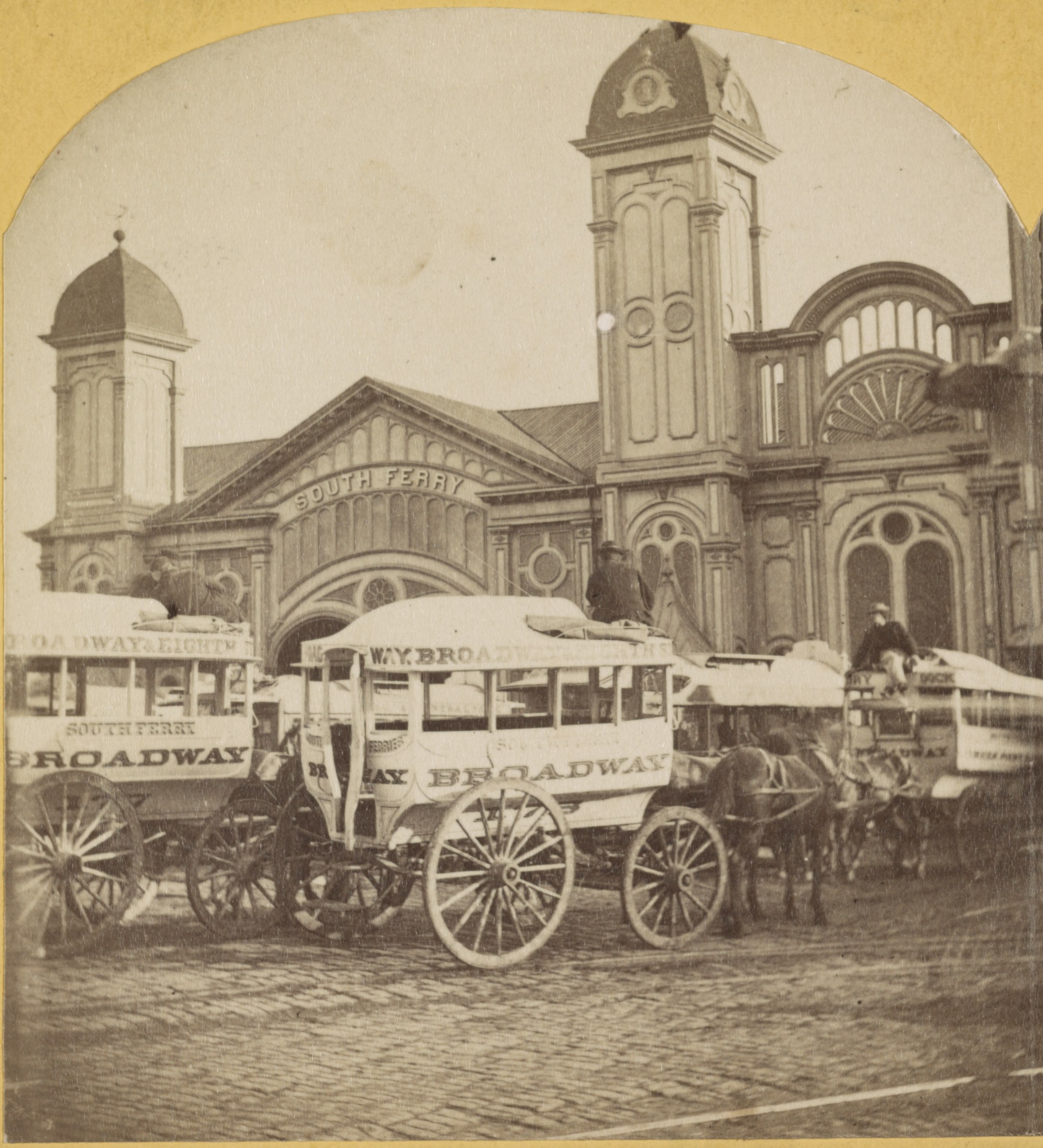
An omnibus was a horse-drawn coach that carried riders along a city street route. The driver sat on top of the coach at the front. Riders inside the cabin passed their fares up to the driver through a small hole in the roof behind his seat, where he also handed them their change.
The driver worked alone, so only he knew how much money he had collected. As a result, he could keep part of it before handing the rest to his company, a theft New Yorkers called “knocking down” fares.
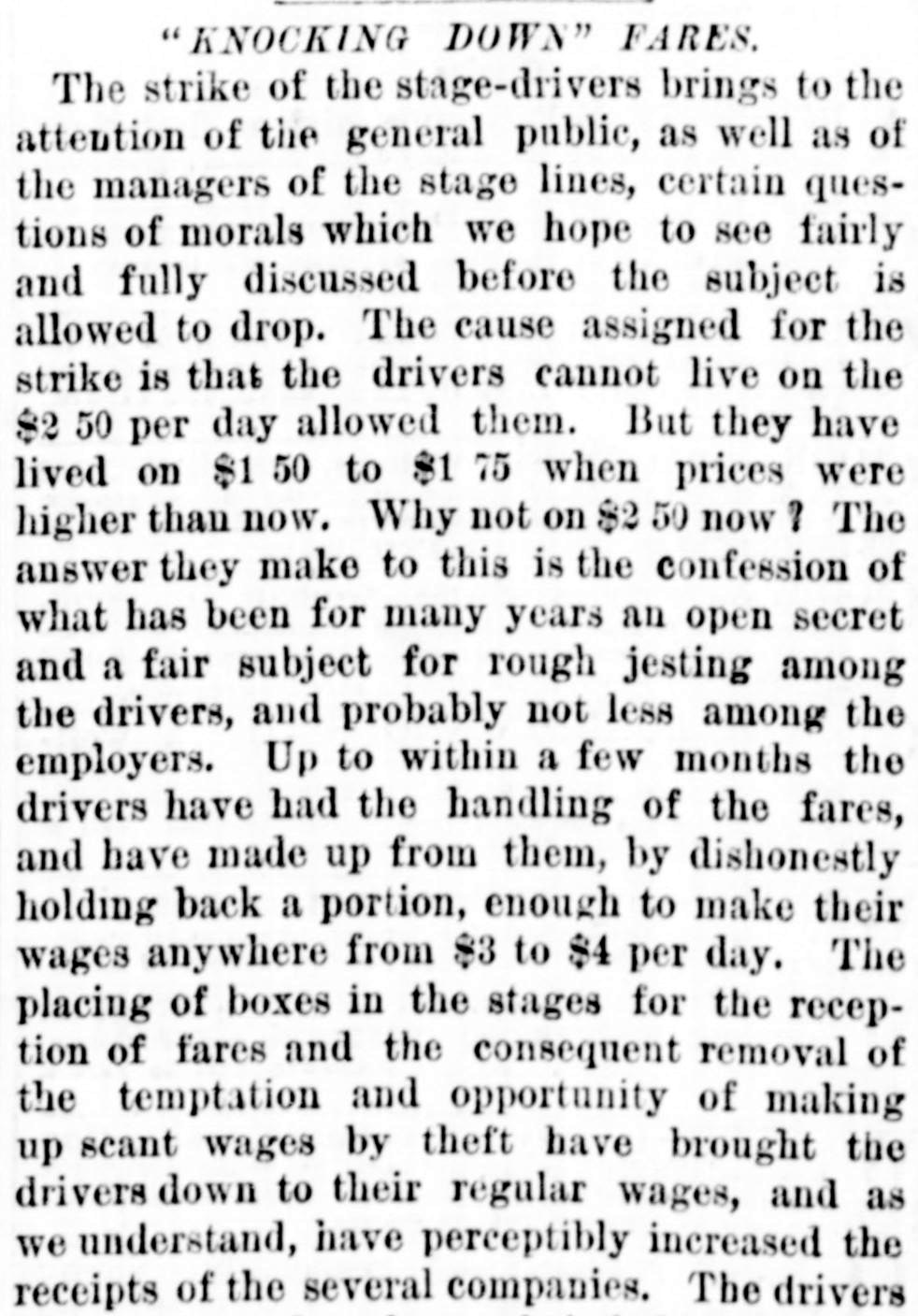
By early 1874, New York’s omnibus companies had installed locked fareboxes in their coaches to stop drivers from keeping fares. Riders dropped their fares into a box that the driver couldn’t open. He made change from a sum the company counted out to him. That May the drivers went on strike, saying they couldn’t live on $2.50 a day. (By comparison, wagon drivers in New York State averaged about $1.75 a day.) The New-York Tribune said the fareboxes had caused the strike. Before the boxes, it wrote, drivers had (dishonestly) raised their pay to $3 or $4 a day by keeping part of the fares.
“The drivers admit that it has been their habit to appropriate to their own use fares enough to make their wages respectable.”
1874
A replacement driver left with the fares on the first day of the strike
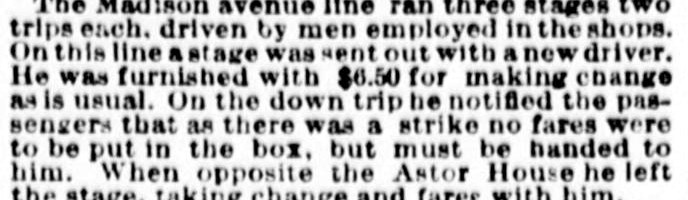
When omnibus drivers went on strike in May 1874, their companies hired new drivers. The New York Sun reported that one new driver told his riders to hand him their fares instead of dropping them in the locked farebox. He then left the coach and took the money with him. A week later, the Tribune wrote that the new drivers were reportedly “more honest than the old ones, or at least they have not yet learned to steal.” By then the strikers had given up and were free to return to work at their old pay, with the fareboxes still in the coaches.
On horse-drawn streetcars, a conductor collected the fares.
1873 to 1882
Streetcar companies hired undercover riders to catch conductors keeping fares
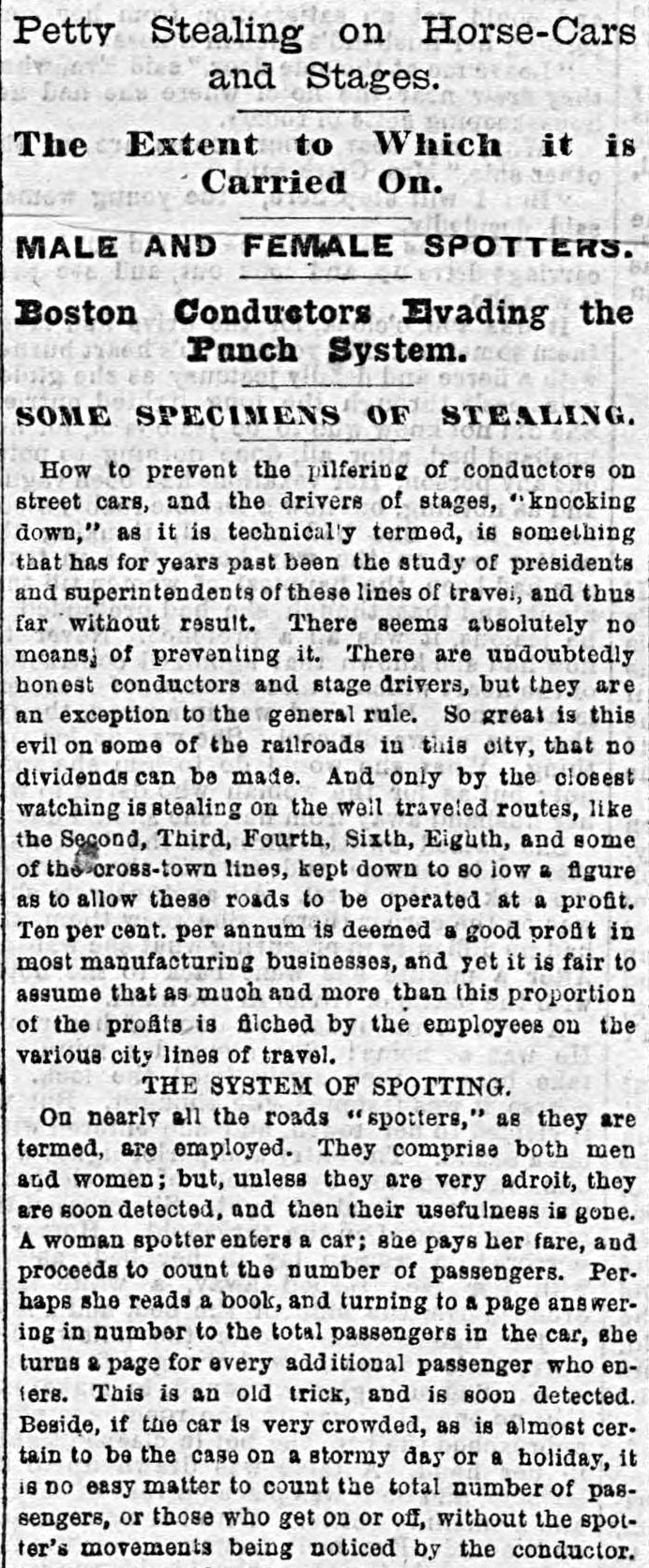
A horsecar was a streetcar pulled by horses along rails. Some horsecar conductors kept part of the fares they collected. In 1873, the New York Dispatch reported that nearly all the horsecar companies hired spotters, who rode as passengers and secretly counted the riders. The companies then compared the spotters’ counts with the fares that the conductors handed in. Some spotters kept count by turning a page of a book for each rider, a trick that conductors soon detected. In 1882, writer James McCabe reported a claim that conductors often split the stolen money with spotters to keep them quiet.
Several horsecar companies made their conductors record each fare with a counting device.
1877
A mechanic showed conductors how to turn back the fare counter
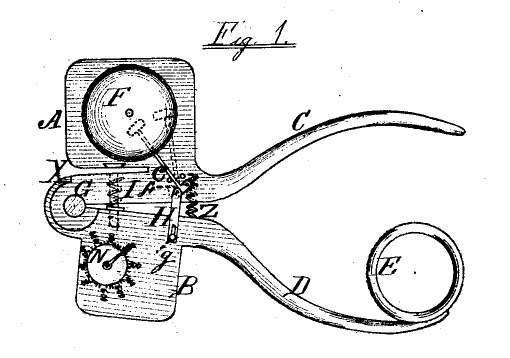
By 1877, several New York horsecar companies required conductors to carry a bell punch, a hand tool with a small bell and a locked counter. Conductors had to punch a hole in a paper slip for every fare they collected. With each punch, the bell rang, and the counter went up by one. Riders could hear the bell, so they could notice when conductors took fares without ringing it. Each company checked the money its conductors handed in against their counters.
In August 1877, the New York Times reported that conductors at several horsecar companies were opening the locks on their bell punches and turning the counters back. The conductors then handed in less money and kept the difference. A mechanic who had worked for the company that made the punches was showing conductors how to open the lock. In return, each conductor paid him a fee, usually $5 a week. At 5 cents a ride, a conductor had to hold back 100 fares a week from his company just to pay the mechanic.
About a dozen conductors of the Second Avenue horsecar company were fired or expected to be prosecuted for turning back their counters. The Bell-punch Company, which owned the punches, then ordered all of them altered.
By 1897, boys on the street were selling transfers, the free slips that riders used to switch streetcar lines without paying again.
The records
Broadway omnibuses at the South Ferry, with their drivers seated on top
Broadway omnibuses at the South Ferry, about 1865
Citation
- Record
- “South Ferry—The Omnibus [New York City],” a stereograph
- Credit
- Published by George Stacy
- Date
- About 1865
- Found at
- Library of Congress, Prints and Photographs Division
- Identifier
- Item 2017645397
- Rights
- No known restrictions on publication
- Full citation
- "South Ferry—The Omnibus [New York City]," stereograph, published by George Stacy, about 1865. Library of Congress, Prints and Photographs Division, item 2017645397. No known restrictions on publication.
- Online
- The stereograph at the Library of Congress
“dishonestly holding back a portion”
New-York Tribune, May 26, 1874
Citation
- Record
- New-York Tribune, page 4, “‘Knocking Down’ Fares.”
- Credit
- New-York Tribune
- Date
- May 26, 1874
- Found at
- Library of Congress, Chronicling America
- Identifier
- sn83030214
- Rights
- Public domain
- Full citation
- New-York Tribune, May 26, 1874, page 4, "'Knocking Down' Fares." Library of Congress, Chronicling America, sn83030214. Public domain.
- Online
- The page at the Library of Congress
“When opposite the Astor House he left the stage, taking change and fares with him.”
The Sun, May 26, 1874
Citation
- Record
- The Sun, page 1, report of the first day of the stage drivers’ strike
- Credit
- The Sun (New York)
- Date
- May 26, 1874
- Found at
- Library of Congress, Chronicling America
- Identifier
- sn83030272
- Rights
- Public domain
- Full citation
- The Sun (New York), May 26, 1874, page 1. Library of Congress, Chronicling America, sn83030272. Public domain.
- Online
- The page at the Library of Congress
“she pays her fare, and proceeds to count the number of passengers”
New York Dispatch, August 10, 1873
Citation
- Record
- New York Dispatch, page 1, “Petty Stealing on Horse-Cars and Stages.”
- Credit
- New York Dispatch
- Date
- August 10, 1873
- Found at
- Library of Congress, Chronicling America
- Identifier
- sn85026214
- Rights
- Public domain
- Full citation
- New York Dispatch, August 10, 1873, page 1, "Petty Stealing on Horse-Cars and Stages." Library of Congress, Chronicling America, sn85026214. Public domain.
- Online
- The page at the Library of Congress
“when a punch is made to cut through a ticket or card, a bell will be rung, and the number of holes punched indicated”
A conductor’s bell punch, patented in 1870
Citation
- Record
- U.S. Patent 100,036, “Improvement in Registering-Punch for Railroad Conductors”
- Credit
- Austin D. Hoffman
- Date
- February 22, 1870
- Found at
- Google Patents
- Identifier
- US100036
- Rights
- Public domain
- Full citation
- Austin D. Hoffman, "Improvement in Registering-Punch for Railroad Conductors," U.S. Patent 100,036, February 22, 1870. Google Patents. Public domain.
- Online
- The patent at Google Patents
“It is said that the new drivers are more honest than the old ones, or at least they have not yet learned to steal.”
New-York Tribune, page 5, report of the stage drivers’ surrender, June 2, 1874.
Citation
- Record
- New-York Tribune, page 5, report of the stage drivers’ surrender
- Credit
- New-York Tribune
- Date
- June 2, 1874
- Found at
- Library of Congress, Chronicling America
- Identifier
- sn83030214
- Rights
- Public domain
- Full citation
- New-York Tribune, June 2, 1874, page 5. Library of Congress, Chronicling America, sn83030214. Public domain.
- Online
- The page at the Library of Congress
“The conductor, it is said, often divides the stolen money with the spy, or “spotter,” as he is called, and thus secures his silence.”
New York by Sunlight and Gaslight, “The Street Railways,” 1882.
Citation
- Record
- New York by Sunlight and Gaslight, “The Street Railways”
- Credit
- James D. McCabe
- Date
- 1882
- Found at
- Internet Archive
- Identifier
- newyorkbysunligh00mcca
- Rights
- Public domain
- Full citation
- James D. McCabe, New York by Sunlight and Gaslight (Philadelphia: Douglass Brothers, 1882), pages 159 and 248, "The Street Railways." Internet Archive, newyorkbysunligh00mcca. Public domain.
- Online
- The book at the Internet Archive
“The conspiracy of car conductors to “beat the punch” has come to an untimely end, at least so far as the Second-Avenue Line is concerned.”
New York Times, page 5, “Beating the Punch,” August 11, 1877.
Citation
- Record
- New York Times, page 5, “Beating the Punch”
- Credit
- New York Times
- Date
- August 11, 1877
- Found at
- The New York Times archive
- Rights
- Public domain
- Full citation
- New York Times, August 11, 1877, page 5, "Beating the Punch." Public domain.
- Online
- The article at the New York Times
Teamsters in New York State, 1874: an average of $1.75 a day
“History of Wages in the United States from Colonial Times to 1928,” Bulletin 604, Table N-12, page 449, 1934.
Citation
- Record
- “History of Wages in the United States from Colonial Times to 1928,” Bulletin 604, Table N-12, page 449
- Credit
- U.S. Bureau of Labor Statistics
- Date
- 1934
- Found at
- FRASER, Federal Reserve Bank of St. Louis
- Identifier
- Bulletin 604
- Rights
- Public domain
- Full citation
- U.S. Bureau of Labor Statistics, History of Wages in the United States from Colonial Times to 1928, Bulletin 604 (1934), Table N-12, page 449. Public domain.
- Online
- The bulletin at FRASER
For through passengers, 5 cents
Annual Report of the State Engineer and Surveyor on the Railroads of the State of New York, page 1002, the Second Avenue Railroad, year ending September 30, 1879.
Citation
- Record
- Annual Report of the State Engineer and Surveyor on the Railroads of the State of New York, page 1002, the Second Avenue Railroad
- Credit
- New York State Engineer and Surveyor
- Date
- Year ending September 30, 1879
- Found at
- Internet Archive
- Rights
- Public domain
- Full citation
- New York State Engineer and Surveyor, Annual Report on the Railroads of the State of New York for the year ending September 30, 1879, page 1002. Internet Archive. Public domain.
- Online
- The report at the Internet Archive
Chapter 2, 1897 to 1922
Riders cheated with paper tickets
1897
Newsboys resold riders’ transfers
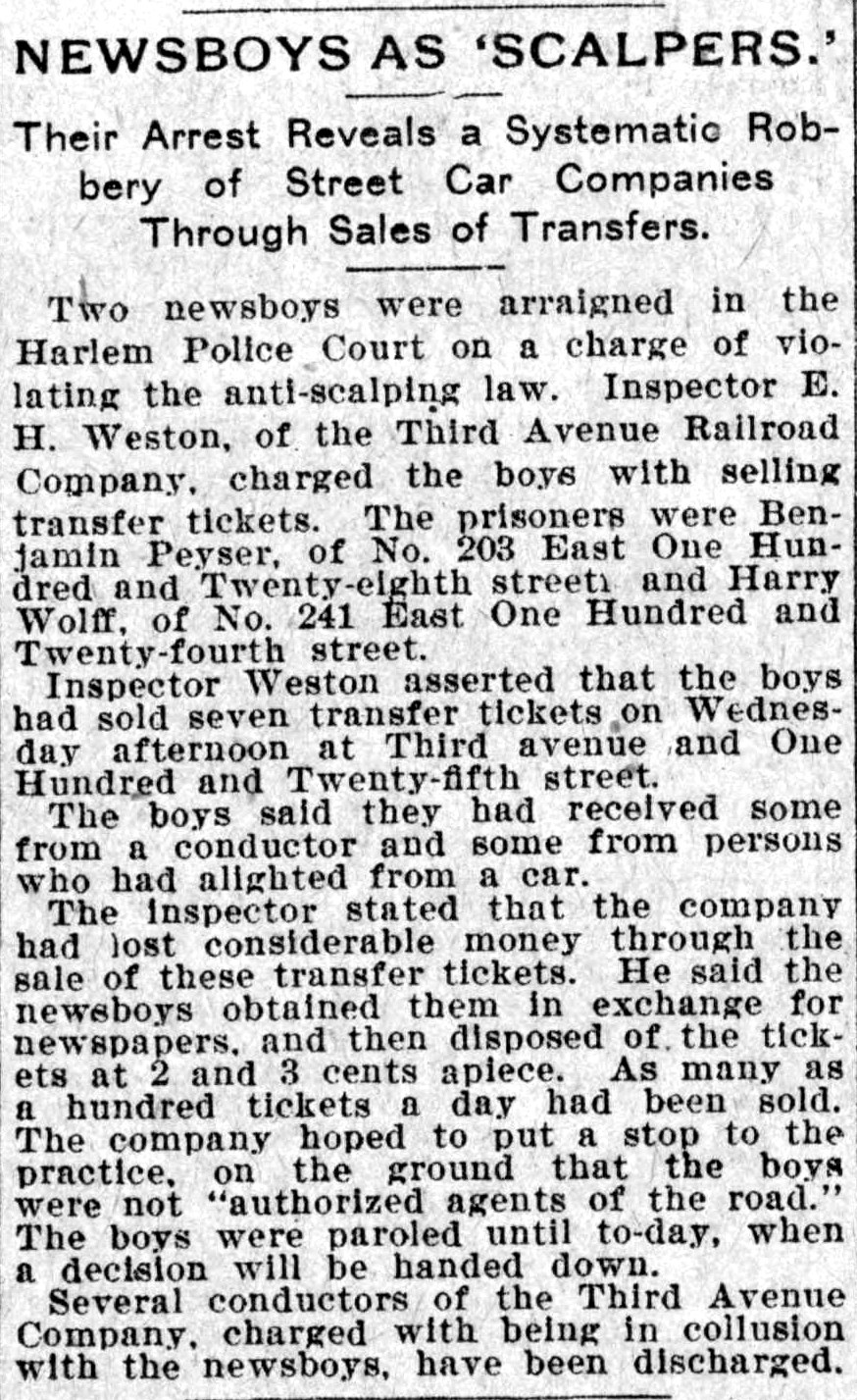
Streetcar riders received a transfer ticket so they could switch to another line without paying again. In 1897, the Third Avenue Railroad, one of New York City’s streetcar companies, accused newsboys in Harlem of reselling riders’ transfers. Riders gave the newsboys their transfers in exchange for newspapers, a company inspector said. The newsboys then sold the transfers for 2 or 3 cents each, about half the 5-cent fare.
The Third Avenue Railroad took two newsboys to court for selling transfers. The company inspector told the court that newsboys had sold up to a hundred transfers a day in all, the New York Journal reported. The newsboys said a conductor had given them some of the transfers. The company fired several conductors it accused of working with the newsboys.
1905
High school students rushed a subway gate, apparently to ride free
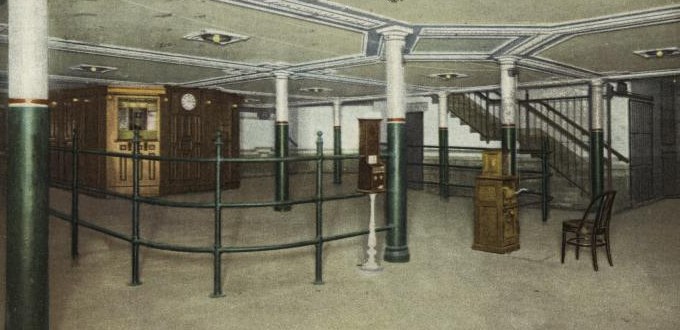
When New York’s subway opened in 1904, riders bought tickets at a booth, then dropped them into a box at the platform gate, where a guard known as the ticket chopper worked a lever to chop up each ticket.
More than once, high school students rushed the gate at the subway’s 103rd Street station ias trains came in. They pushed past the ticket chopper, apparently to avoid paying fares, the New York Times reported.
In December 1905, about 75 students rushed the 103rd Street gate while detectives were waiting there. The detectives caught three boys. A magistrate fined each boy $1, then paid the fine himself for the one boy who had no money.
A transit company in Brooklyn posted ticket choppers at its platform gates.
1907
Riders pretended to drop tickets into the ticket box
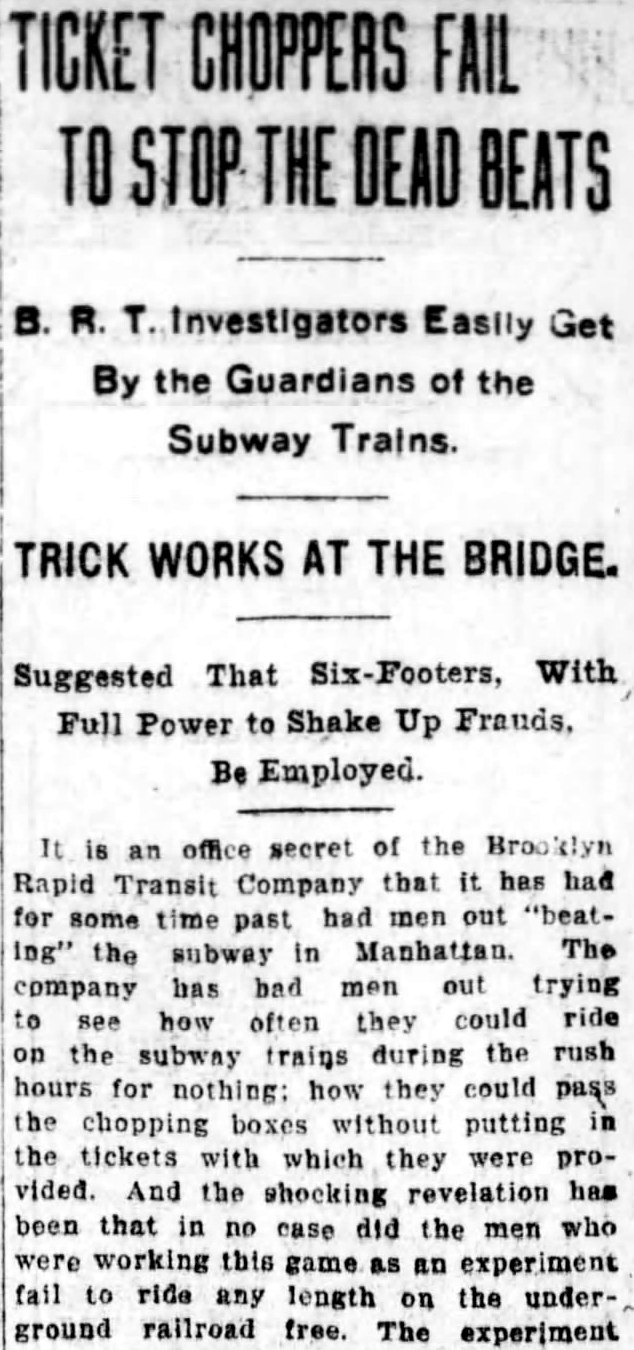
In the evening crowds at the Brooklyn Bridge, some riders of the Brooklyn Rapid Transit Company (BRT) pretended to drop a ticket into the box as they walked past the ticket chopper, the Brooklyn Daily Eagle reported in January 1907. About one rider in ten put a hand into the box without a ticket, according to the Eagle.
The Eagle reported that the BRT’s ticket choppers sat low beside their boxes, where they couldn’t see whether a ticket went in, and kept working their levers. The BRT reportedly tried posting watchmen beside its ticket boxes, who stopped several riders who hadn’t dropped in tickets.
Some subway riders cheated by tearing their tickets.
1922
Riders tore strips of 10 tickets into 11 pieces
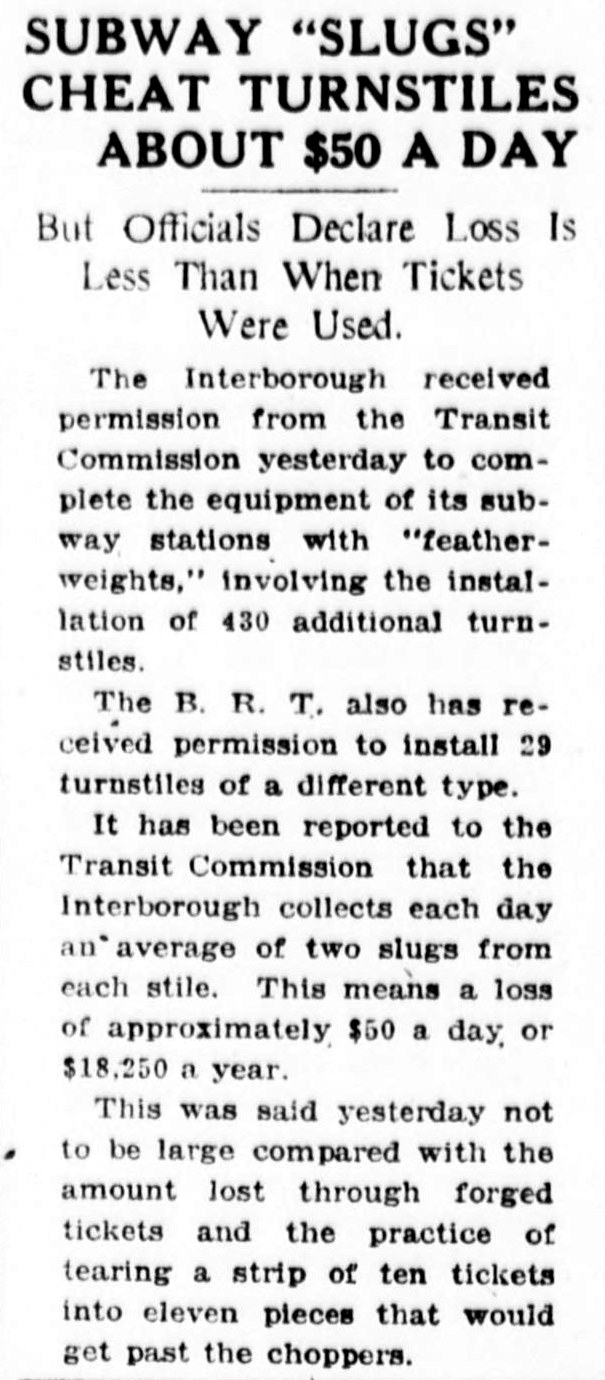
Some subway riders tore a strip of 10 tickets into 11 pieces and used each piece as a ticket. The ticket choppers accepted each piece as a whole ticket, the Evening World reported in 1922.
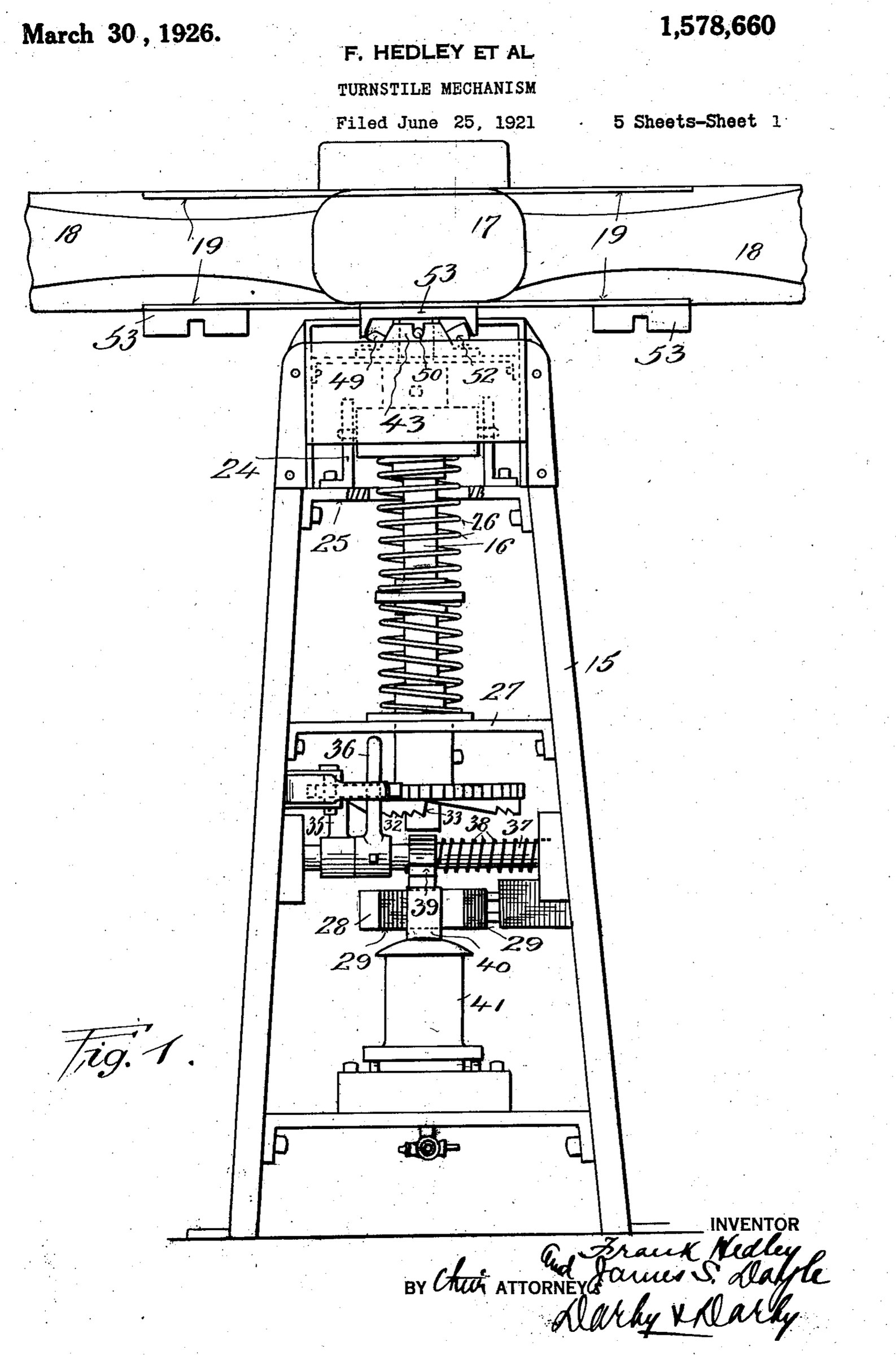
By March 1922, the Interborough Rapid Transit Company (IRT) was replacing its ticket choppers with turnstiles. A turnstile was a gate that let one rider through for each nickel dropped into its slot.
Riders were soon dropping fake coins, known as slugs, into the turnstiles.
The records
“As many as a hundred tickets a day had been sold.”
New York Journal, September 3, 1897
Citation
- Record
- New York Journal, page 10, “Newsboys as ‘Scalpers.’”
- Credit
- New York Journal
- Date
- September 3, 1897
- Found at
- Library of Congress, Chronicling America
- Identifier
- sn83030180
- Rights
- Public domain
- Full citation
- New York Journal, September 3, 1897, page 10, "Newsboys as 'Scalpers.'" Library of Congress, Chronicling America, sn83030180. Public domain.
- Online
- The page at the Library of Congress
“A subway station, New York”
A subway station with its ticket booth and chopper box, about 1912. Detroit Publishing Co. postcard, New York Public Library
Citation
- Record
- Detroit Publishing Co. postcard 9054, “A Subway Station, New York”
- Credit
- Detroit Publishing Co.
- Date
- About 1912
- Found at
- The New York Public Library, Wallach Division Picture Collection
- Identifier
- Image ID 836137
- Rights
- Public domain in the United States, according to the New York Public Library
- Full citation
- Detroit Publishing Co., postcard 9054, "A Subway Station, New York," about 1912. The New York Public Library, Wallach Division Picture Collection, image ID 836137. Public domain in the United States.
- Online
- The postcard at the New York Public Library
“Ticket Choppers Fail to Stop the Dead Beats”
Brooklyn Daily Eagle, January 10, 1907
Citation
- Record
- Brooklyn Daily Eagle, page 10, “Ticket Choppers Fail to Stop the Dead Beats”
- Credit
- Brooklyn Daily Eagle
- Date
- January 10, 1907
- Found at
- Brooklyn Public Library, Brooklyn Newsstand
- Rights
- Public domain
- Full citation
- Brooklyn Daily Eagle, January 10, 1907, page 10, "Ticket Choppers Fail to Stop the Dead Beats." Brooklyn Public Library, Brooklyn Newsstand. Public domain.
- Online
- The page at the Brooklyn Public Library
“that would get past the choppers”
The Evening World, March 30, 1922
Citation
- Record
- The Evening World, page 19, “Subway ‘Slugs’ Cheat Turnstiles About $50 a Day.”
- Credit
- The Evening World
- Date
- March 30, 1922
- Found at
- Library of Congress, Chronicling America
- Identifier
- sn83030193
- Rights
- Public domain
- Full citation
- The Evening World, March 30, 1922, page 19, "Subway 'Slugs' Cheat Turnstiles About $50 a Day." Library of Congress, Chronicling America, sn83030193. Public domain.
- Online
- The page at the Library of Congress
“Turnstile mechanism”
U.S. Patent 1,578,660
Citation
- Record
- “Turnstile mechanism,” U.S. Patent 1,578,660
- Credit
- F. Hedley and J. S. Doyle
- Date
- Filed June 25, 1921, granted March 30, 1926
- Found at
- Google Patents
- Identifier
- U.S. Patent 1,578,660
- Rights
- Public domain
- Full citation
- U.S. Patent 1,578,660, "Turnstile mechanism," F. Hedley and J. S. Doyle, filed June 25, 1921, granted March 30, 1926. Public domain.
- Online
- The patent at Google Patents
“practically overpowered the ticket chopper”
The New York Times, “Mobbed Ticket Chopper,” December 5, 1905.
Citation
- Record
- The New York Times, “Mobbed Ticket Chopper”
- Credit
- The New York Times
- Date
- December 5, 1905
- Found at
- The New York Times archive
- Rights
- Public domain
- Full citation
- The New York Times, December 5, 1905, "Mobbed Ticket Chopper." Public domain.
- Online
- The story at the Times
“a single fare of five cents”
The New York Times, public notice of the Forty-second Street, Manhattanville and St. Nicholas Avenue Railway, February 18, 1897.
Citation
- Record
- The New York Times, public notice of the Forty-second Street, Manhattanville and St. Nicholas Avenue Railway
- Credit
- The New York Times
- Date
- February 18, 1897
- Found at
- Internet Archive
- Rights
- Public domain
- Full citation
- The New York Times, February 18, 1897, public notice of the Forty-second Street, Manhattanville and St. Nicholas Avenue Railway. Internet Archive. Public domain.
- Online
- The issue at the Internet Archive
“Uniform fare for any distance 5 c.”
Karl Baedeker, The United States, with an Excursion into Mexico, second revised edition, page 12, 1899.
Citation
- Record
- Karl Baedeker, The United States, with an Excursion into Mexico, second revised edition, page 12
- Credit
- Karl Baedeker
- Date
- 1899
- Found at
- Internet Archive
- Rights
- Public domain
- Full citation
- Karl Baedeker, The United States, with an Excursion into Mexico, second revised edition (Leipzig, 1899), page 12. Internet Archive. Public domain.
- Online
- The guide at the Internet Archive
Chapter 3, 1922 to 1940
Riders and workers cheated at the turnstile
1922
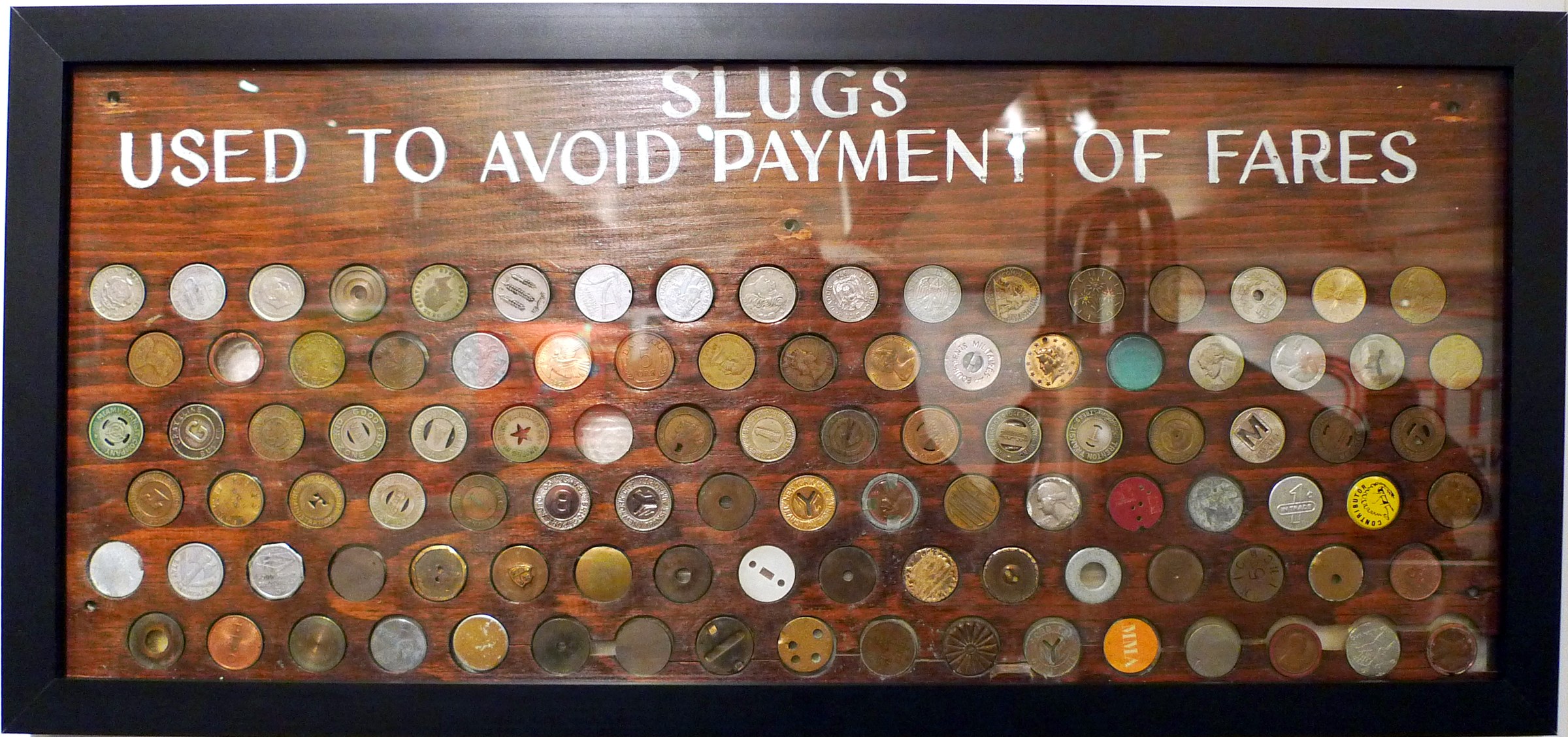
Riders paid with slugs in place of nickels
By March 1922, the Interborough Rapid Transit Company (IRT) was finding an average of two slugs, or fake coins, a day in each of its turnstiles. Dishonest riders had dropped them in to avoid paying the 5-cent fare (about $1 in today’s dollars). The Evening World put the loss across all the company’s turnstiles at about $50 a day (about $950 in today’s dollars). Even so, officials said, the company had lost more to cheating when riders paid with tickets.
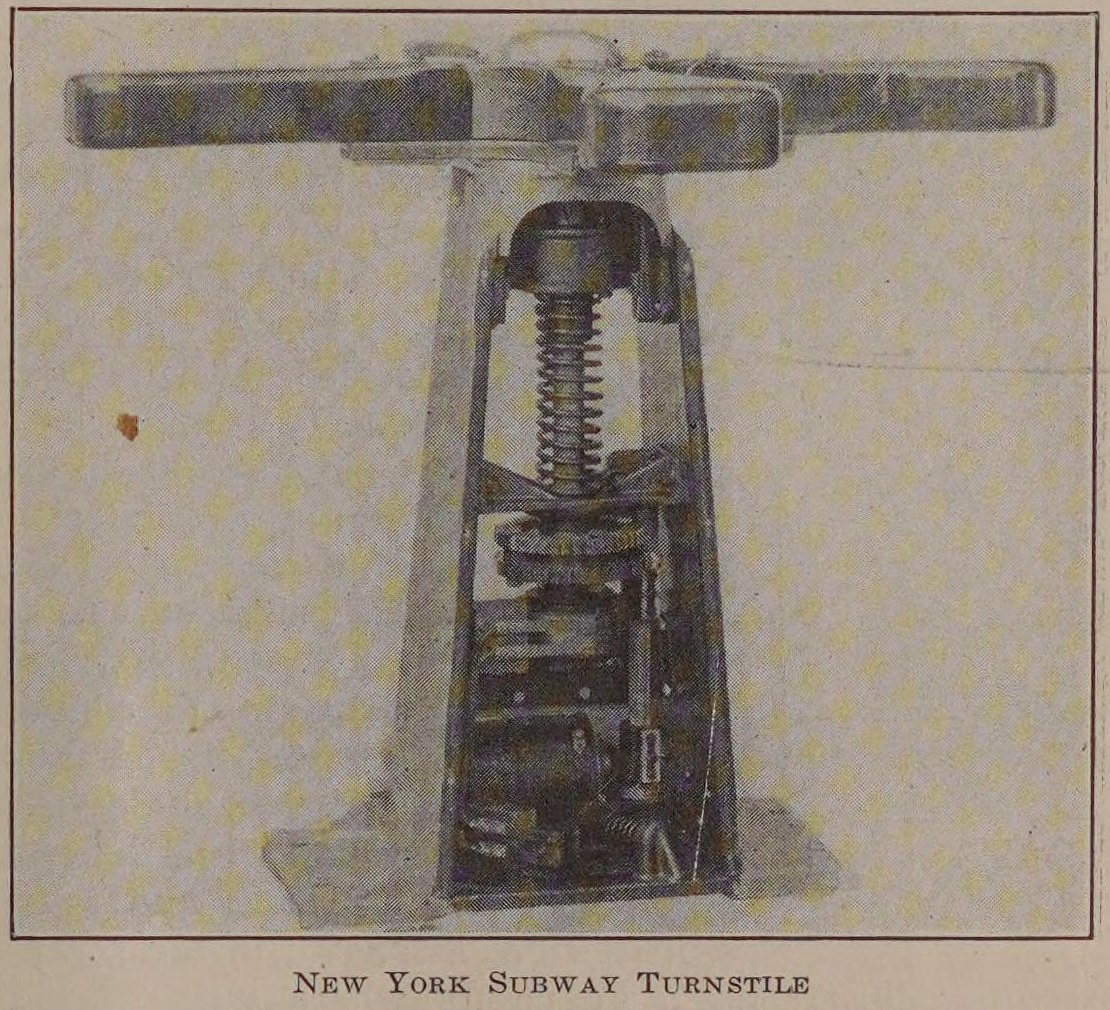
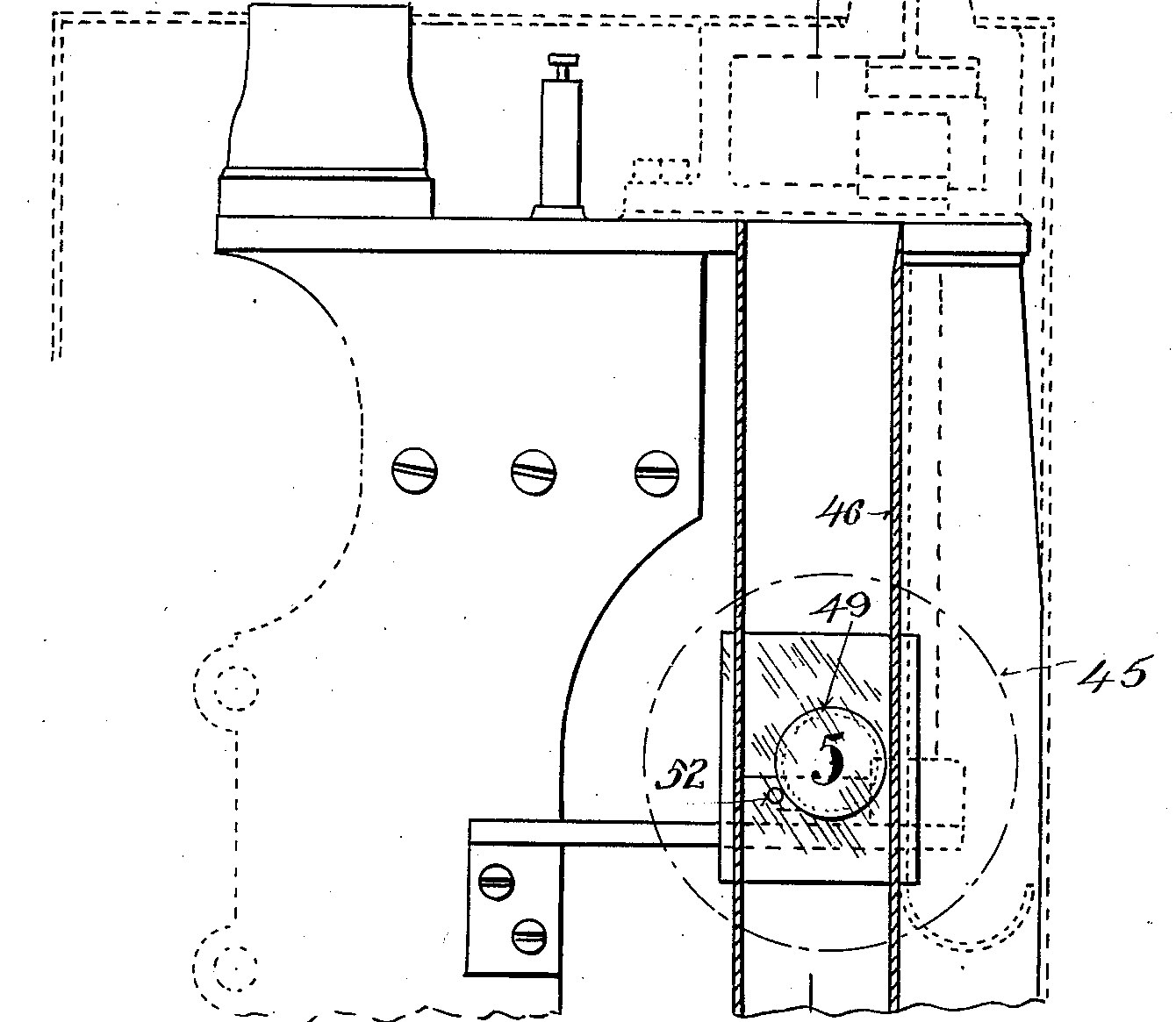
By December 1922, the IRT was installing turnstiles with a lighted magnifying lens. Each nickel or slug a rider dropped in stayed in view behind the lens until the next rider’s coin replaced it so that a platform attendant could spot a slug from 20 feet away, the Electric Railway Journal reported.
1923
A rider went to jail for paying with a slug
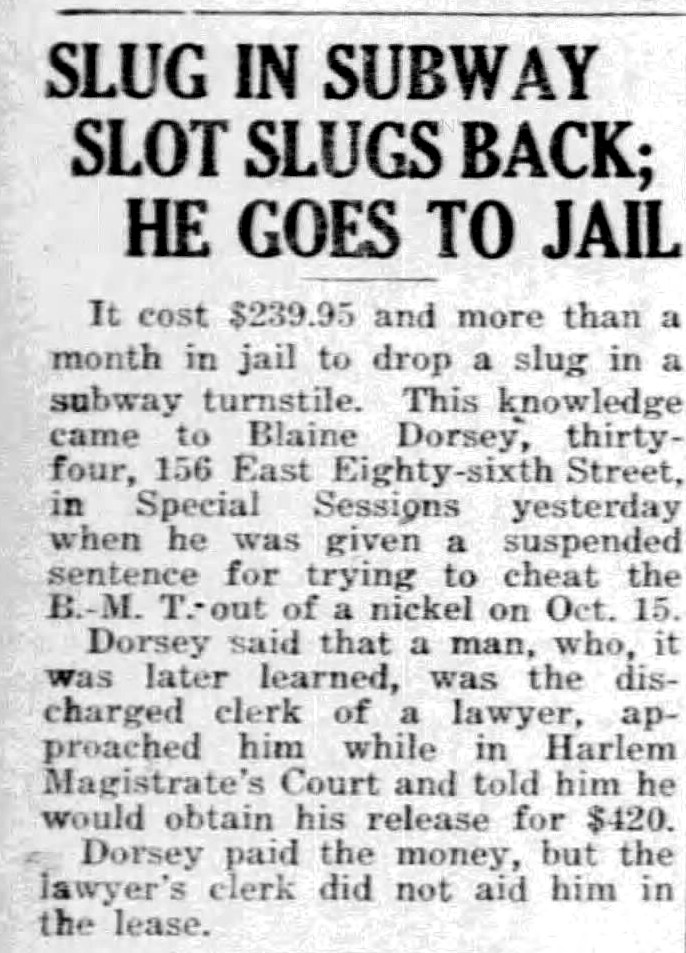
In October 1923, Blaine Dorsey was arrested for dropping a slug into a subway turnstile to save a nickel. In court, a man who had once been a lawyer’s clerk offered to get Dorsey released if Dorsey paid him. Dorsey paid, but the man didn’t help. Dorsey spent more than a month in jail before another court gave him a suspended sentence, the Daily News reported.
1930
Riders squeezed through the turnstile behind paying passengers
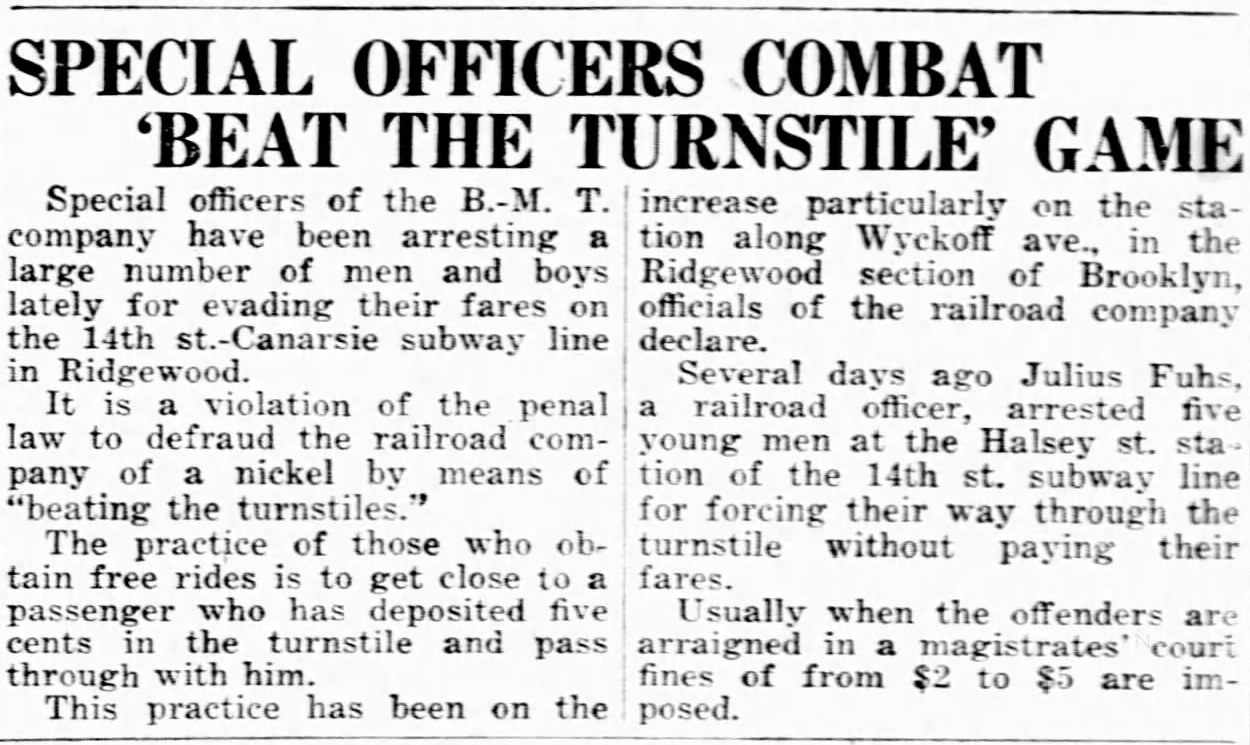
In 1930, men and boys on a subway line in Brooklyn were squeezing through turnstiles right behind paying passengers, the Daily News reported. The subway company’s special officers arrested many of them. Magistrates usually fined them $2 to $5 for evading a 5-cent fare.
By 1935, riders were paying with slugs on the city-run Independent Subway System (IND).
1935
Riders dropped more than a million slugs into the city’s turnstiles
Riders had dropped 1,600,000 slugs into the IND’s turnstiles since it opened in 1932, the Brooklyn Daily Eagle reported in June 1935. City transit officials said the slugs cost the city less than extra guards or coin-inspecting devices would, according to the Daily News.
In June 1935, city officials took the slugs out on boats and dumped them in Long Island Sound, along with guns, knives, and slot machines that the police had seized.
The city checked the money from each turnstile against a counter that recorded every nickel dropped in.
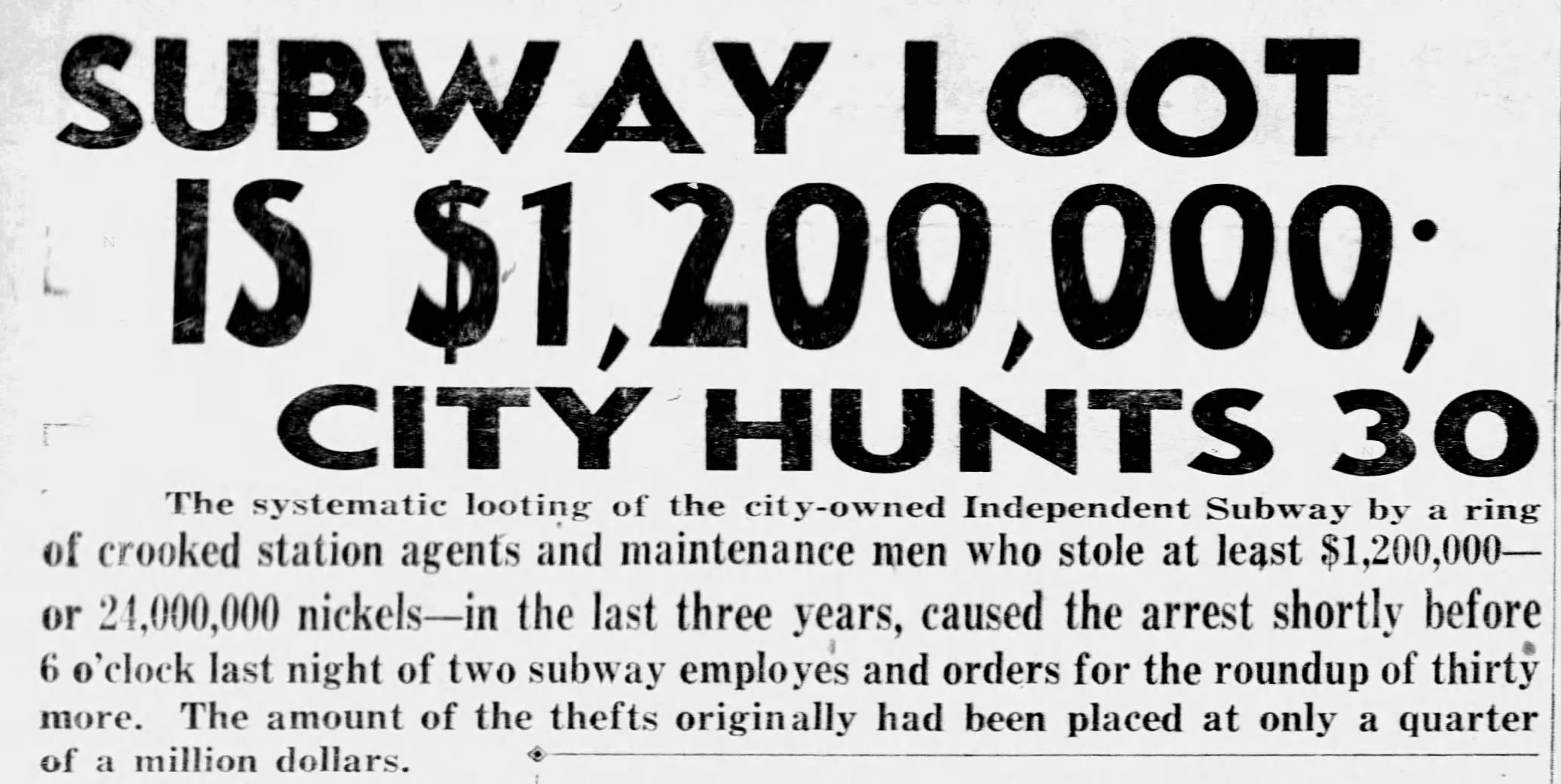
1939
Subway workers turned back the turnstile counters
A dishonest IND station agent couldn’t open a turnstile’s counter himself, so he would report the turnstile as broken to get a maintenance man to his station. The maintenance man would turn the counter back by hundreds of fares, so that the two could share the nickels that the counter no longer recorded.
In January 1939, eight IND workers admitted stealing nickels from the turnstiles, the Eagle reported. The district attorney said about 30 station agents were involved. He estimated the loss over three years at more than $1 million (about $23 million in today’s dollars). The chairman of the city’s transit board called that figure preposterous. He said he had evidence of a loss of $1,000 at most (about $23,000 in today’s dollars).
To keep maintenance men from turning the counters back, the city’s transit board was installing a device to seal each counter.
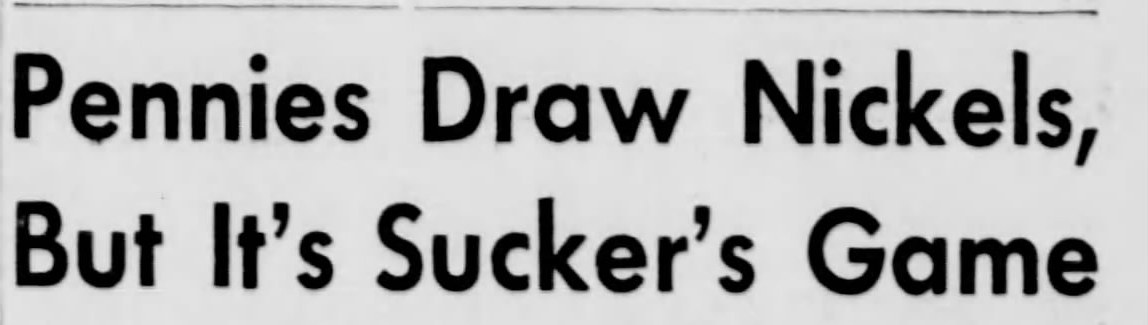
1940
A man sucked nickels out of a turnstile’s coin slot
In December 1940, a subway policeman at the IND’s Greenpoint station watched a man drop a coin into a turnstile and wait while other riders paid. The man, Chester Madzenski, then bent down to the coin slot as if to kiss it. The policeman arrested him and found that the coin was a flattened penny, which had kept the riders’ nickels from dropping into the coin box. Madzenski had sucked the top nickel out through the slot.
The magistrate who heard the charge quipped that “dishonesty in any form is still a sucker’s game,” the Eagle reported. He sentenced Madzenski to 90 days in jail.
From 1953, subway riders paid the fare, by then 15 cents, with a token, a brass disc that the city's Transit Authority sold at station booths.
The records
“that would get past the choppers”
The Evening World, March 30, 1922
Citation
- Record
- The Evening World, page 19, “Subway ‘Slugs’ Cheat Turnstiles About $50 a Day.”
- Credit
- The Evening World
- Date
- March 30, 1922
- Found at
- Library of Congress, Chronicling America
- Identifier
- sn83030193
- Rights
- Public domain
- Full citation
- The Evening World, March 30, 1922, page 19, "Subway 'Slugs' Cheat Turnstiles About $50 a Day." Library of Congress, Chronicling America, sn83030193. Public domain.
- Online
- The page at the Library of Congress
“New York Subway Turnstile”
The turnstile built for the IRT. Electric Railway Journal, December 16, 1922
Citation
- Record
- Electric Railway Journal, page 947, “New York Subway Turnstile on the Market”
- Credit
- Electric Railway Journal
- Date
- December 16, 1922
- Found at
- Internet Archive
- Rights
- Public domain
- Full citation
- Electric Railway Journal, December 16, 1922, page 947, "New York Subway Turnstile on the Market." Internet Archive. Public domain.
- Online
- The page at the Internet Archive
“Slug detecting device for coin controlled machines”
A nickel behind the lens of a slug detector. U.S. Patent 1,602,487, filed in 1922
Citation
- Record
- “Slug detecting device for coin controlled machines,” U.S. Patent 1,602,487
- Credit
- F. Hedley and J. S. Doyle
- Date
- Filed May 6, 1922, granted October 12, 1926
- Found at
- Google Patents
- Identifier
- U.S. Patent 1,602,487
- Rights
- Public domain
- Full citation
- U.S. Patent 1,602,487, "Slug detecting device for coin controlled machines," F. Hedley and J. S. Doyle, filed May 6, 1922, granted October 12, 1926. Public domain.
- Online
- The patent at Google Patents
Slugs used to avoid payment of fares
Slugs on display at the New York Transit Museum, 2012. Photograph by acb, CC BY-NC-SA 2.0
Citation
- Record
- “SLUGS USED TO AVOID PAYMENT OF FARES,” an exhibit at the New York Transit Museum
- Credit
- Photograph by acb
- Date
- April 13, 2012
- Found at
- Flickr
- Rights
- CC BY-NC-SA 2.0
- Full citation
- "SLUGS USED TO AVOID PAYMENT OF FARES," an exhibit at the New York Transit Museum. Photograph by acb, April 13, 2012, Flickr, CC BY-NC-SA 2.0. Brightened and cropped to the board.
- Online
- The photograph at Flickr
The CC BY-NC-SA 2.0 licence
“SPECIAL OFFICERS COMBAT ‘BEAT THE TURNSTILE’ GAME”
Daily News, July 24, 1930
Citation
- Record
- Daily News, “Special Officers Combat ‘Beat the Turnstile’ Game”
- Credit
- Daily News, New York
- Date
- July 24, 1930
- Found at
- newspapers.com
- Rights
- Public domain
- Full citation
- Daily News (New York), July 24, 1930, "Special Officers Combat 'Beat the Turnstile' Game." Public domain.
- Online
- The page at newspapers.com
“It cost $239.95 and more than a month in jail to drop a slug in a subway turnstile.”
Daily News, November 24, 1923
Citation
- Record
- Daily News, page 26, “Slug in Subway Slot Slugs Back; He Goes to Jail”
- Credit
- Daily News, New York
- Date
- November 24, 1923
- Found at
- newspapers.com
- Rights
- Public domain
- Full citation
- Daily News (New York), November 24, 1923, page 26, "Slug in Subway Slot Slugs Back; He Goes to Jail." Public domain.
- Online
- The page at newspapers.com
“Mayor LaGuardia is expected to be guest of honor and pitch out the first slug.”
Daily News, June 7, 1935
Citation
- Record
- Daily News, Brooklyn section page 25, “Fish to Get 3 Tons of Subway Phonies”
- Credit
- Daily News, New York
- Date
- June 7, 1935
- Found at
- newspapers.com
- Rights
- Copyrighted. Only the headline, the first paragraph and a few quoted words appear on this site.
- Full citation
- Daily News (New York), June 7, 1935, Brooklyn section page 25, "Fish to Get 3 Tons of Subway Phonies."
- Online
- The page at newspapers.com
“SUBWAY LOOT IS $1,200,000; CITY HUNTS 30”
Daily News, January 17, 1939
Citation
- Record
- Daily News, page 2, “Subway Loot Is $1,200,000; City Hunts 30”
- Credit
- Daily News, New York
- Date
- January 17, 1939
- Found at
- newspapers.com
- Rights
- Copyrighted. Only the headline and a few quoted words appear on this site.
- Full citation
- Daily News (New York), January 17, 1939, page 2, "Subway Loot Is $1,200,000; City Hunts 30."
- Online
- The page at newspapers.com
“dishonesty in any form is still a sucker’s game”
Brooklyn Eagle, December 21, 1940
Citation
- Record
- Brooklyn Eagle, page 11, “Pennies Draw Nickels, But It’s Sucker’s Game”
- Credit
- Brooklyn Eagle
- Date
- December 21, 1940
- Found at
- Brooklyn Public Library, Brooklyn Newsstand
- Rights
- Copyrighted. Only the headline and a few quoted words appear on this site.
- Full citation
- Brooklyn Eagle, December 21, 1940, page 11, "Pennies Draw Nickels, But It's Sucker's Game." Brooklyn Public Library, Brooklyn Newsstand.
- Online
- The page at the Brooklyn Public Library
“put in turnstiles of the Independent subway since its opening in 1932”
Brooklyn Eagle, page 1, “Mayor Issues Threat to Gangsters As City Dumps Weapons in L. I. Sound,” June 8, 1935.
Citation
- Record
- Brooklyn Eagle, page 1, “Mayor Issues Threat to Gangsters As City Dumps Weapons in L. I. Sound”
- Credit
- Brooklyn Daily Eagle
- Date
- June 8, 1935
- Found at
- Brooklyn Public Library, Brooklyn Newsstand
- Rights
- Copyrighted. Only a few words are quoted on this site.
- Full citation
- Brooklyn Eagle, June 8, 1935, page 1, "Mayor Issues Threat to Gangsters As City Dumps Weapons in L. I. Sound." Brooklyn Public Library, Brooklyn Newsstand.
- Online
- The page at the Brooklyn Public Library
“reel back the revolving recorder to show the collection of fewer fares”
Brooklyn Eagle, pages 1 and 3, “8 Admit Theft of City Nickels,” January 17, 1939.
Citation
- Record
- Brooklyn Eagle, pages 1 and 3, “8 Admit Theft of City Nickels”
- Credit
- Brooklyn Eagle
- Date
- January 17, 1939
- Found at
- Brooklyn Public Library, Brooklyn Newsstand
- Rights
- Copyrighted. Only a few words are quoted on this site.
- Full citation
- Brooklyn Eagle, January 17, 1939, pages 1 and 3, "8 Admit Theft of City Nickels." Brooklyn Public Library, Brooklyn Newsstand.
- Online
- The page at the Brooklyn Public Library
“place his mouth over the slot and suck out a nickel”
The New York Times, page 11, “Odd Subway Thefts Are Bared in Arrest,” December 21, 1940.
Citation
- Record
- The New York Times, page 11, “Odd Subway Thefts Are Bared in Arrest”
- Credit
- The New York Times
- Date
- December 21, 1940
- Found at
- The New York Times archive
- Rights
- Copyrighted. Only a few words are quoted on this site.
- Full citation
- "Odd Subway Thefts Are Bared in Arrest; Prisoner Sucked Out Coins From Turnstile, Court Is Told," The New York Times, December 21, 1940, page 11.
- Online
- The story at the Times
“drew 90 days in the workhouse”
Daily News, “‘Sucker’ Gets 90 Days,” December 27, 1940.
Citation
- Record
- Daily News, “‘Sucker’ Gets 90 Days”
- Credit
- Daily News, New York
- Date
- December 27, 1940
- Found at
- newspapers.com
- Rights
- Copyrighted. Only a few words are quoted on this site.
- Full citation
- Daily News (New York), December 27, 1940, "'Sucker' Gets 90 Days."
- Online
- The page at newspapers.com
Chapter 4, 1953 to 2003
Riders cheated with tokens

1953
Riders paid with play coins in place of tokens
On July 25, 1953, the first day that subway riders paid with tokens, some dropped children’s play coins into the turnstiles and got through. The turnstiles accepted a play coin because it was nearly the size of a token. Stores sold the metal play coins at their toy counters, 16 of them for a dime, while a token cost 15 cents (about $1.80 in today’s dollars).
Having learned of the play coins on the afternoon of July 25, the Transit Authority’s general manager spent the night on the problem. By the next afternoon, he had found an adjustment that made a turnstile reject the play coins. Crews began adjusting every turnstile, which was expected to take several days. The Woolworth stores stopped selling the play coins in the city for the time being.
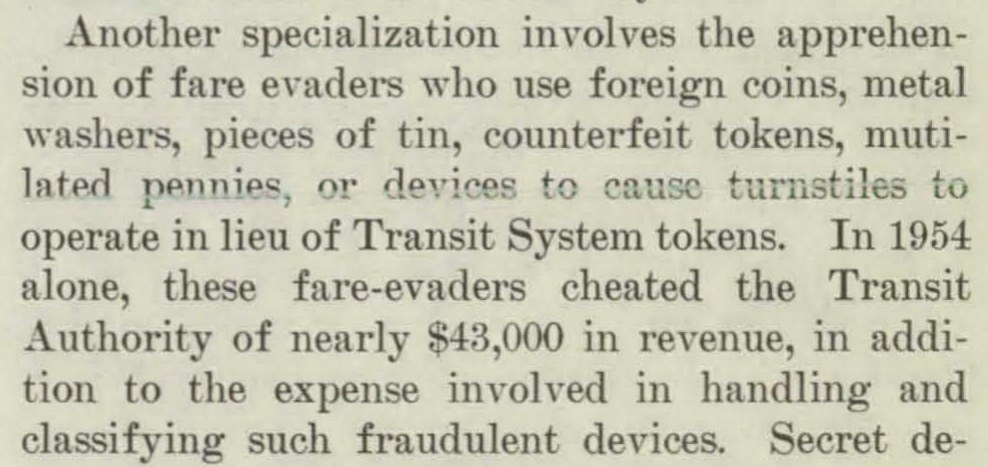
1954 to 1957
Riders tried washers, tin, and foreign coins in place of tokens
In 1959, the chief of the transit police wrote that fare evaders had dropped “foreign coins, metal washers, pieces of tin, counterfeit tokens” into the turnstiles. By his count, such substitutes cost the Transit Authority nearly $43,000 in fares in 1954 (about $500,000 in today’s dollars). Transit police caught many of the fare evaders and seized equipment used to make counterfeit tokens. By 1957, the yearly loss had fallen below $10,000.

1969
Robbers held up bus drivers for the fares
Until 1969, riders on New York’s buses could get change from the driver when paying in cash. Robbers held up bus drivers for that cash. There were 304 holdups of bus drivers in the first seven months of 1969, up from 109 in the same months of 1968, the Daily News reported.
To end the holdups, the Transit Authority had its bus drivers stop making change in August 1969. Riders now had to pay the exact fare, by then 20 cents, in coins or with a subway token. They dropped the fare into a locked farebox that could be opened only at the bus garage.
On August 31, 1969, the first day of the exact fare, two men held up a bus driver in Brooklyn at gunpoint. The driver, the New York Times reported, “explained that he could not get at the fares in the sealed coin box, handed over $6 of his own money.”
1982 to 1985
Riders paid with Connecticut highway tokens
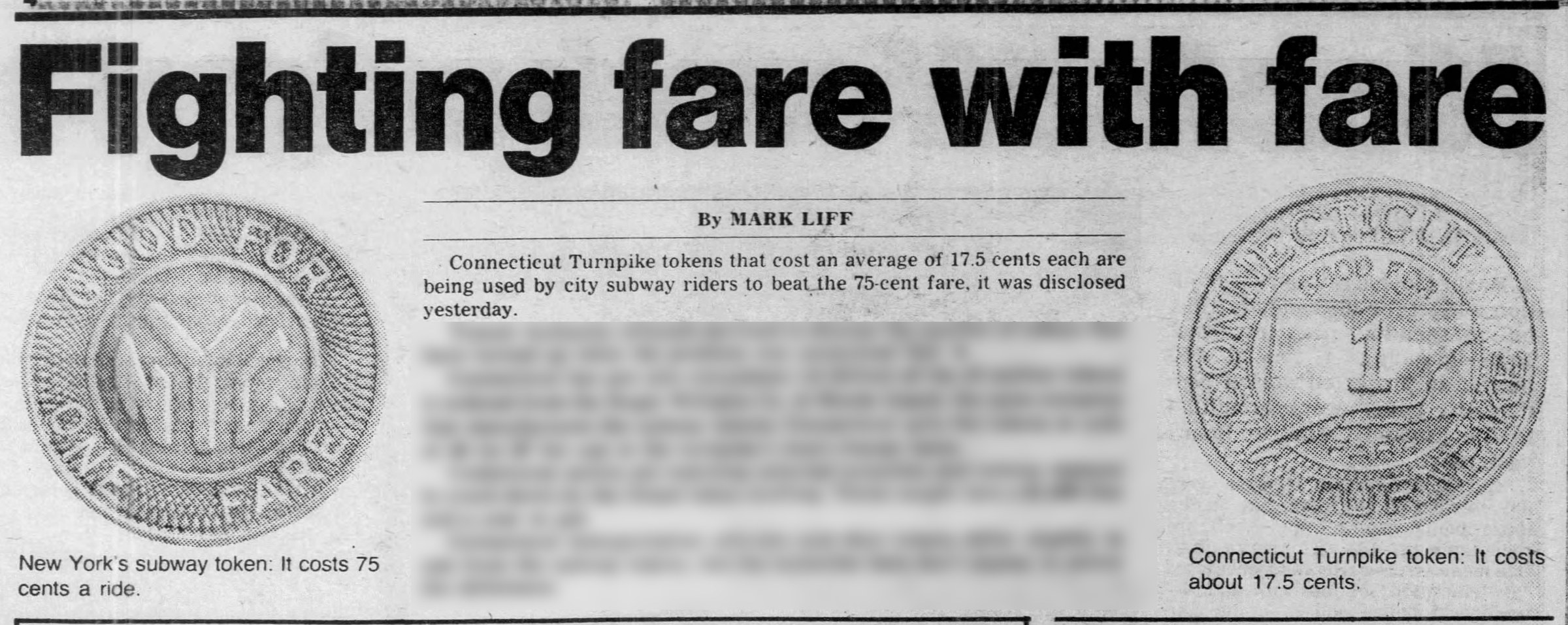
In October 1982, Connecticut began selling tokens for its turnpike’s toll lanes in rolls of 40 for $7, or 17.5 cents a token. They were nearly the same size as New York’s subway tokens, so within weeks, subway riders were dropping Connecticut tokens into the turnstiles in place of subway tokens, which by then cost 75 cents.
Undercover police watched the turnstiles for riders using Connecticut tokens and charged those they caught. The Transit Authority changed some turnstiles to make the slightly larger Connecticut token harder to use. However, in 1985 the Transit Authority was still finding about 100,000 Connecticut tokens a month in its turnstiles.
1983 to 2003
Thieves sucked riders’ tokens out of the turnstile slots
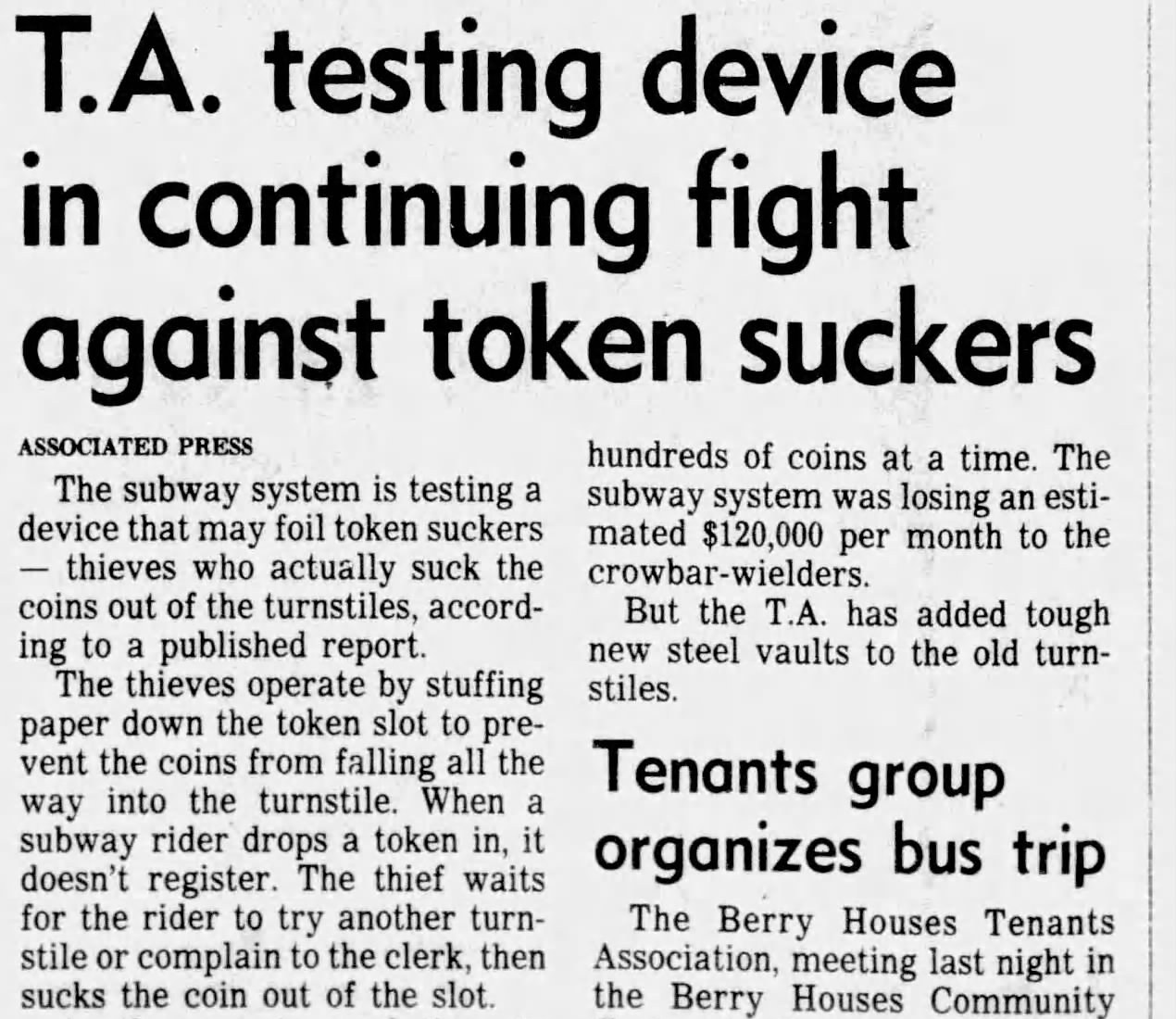
Thieves blocked turnstile token slots with scraps of paper or cardboard, then stood by. Riders who dropped tokens into the jammed slots found the turnstiles still locked and moved to another turnstile. The thieves then put their lips over the slots and sucked the tokens out. Youths were stealing tokens this way and reselling them, the Times reported in 1983.
One token clerk tried chili powder in the slots to stop a group of youths. A transit police inspector told the Times what happened next: “The kids came back with buckets of water, threw the water on the turnstiles and then threw the rest at the token clerk.” Some transit police officers put a little Mace, an irritating spray, around the slots and arrested the thieves whose lips turned bright red, the Times wrote in 2003.
1985 to 1991
Counterfeiters copied the Transit Authority’s new token
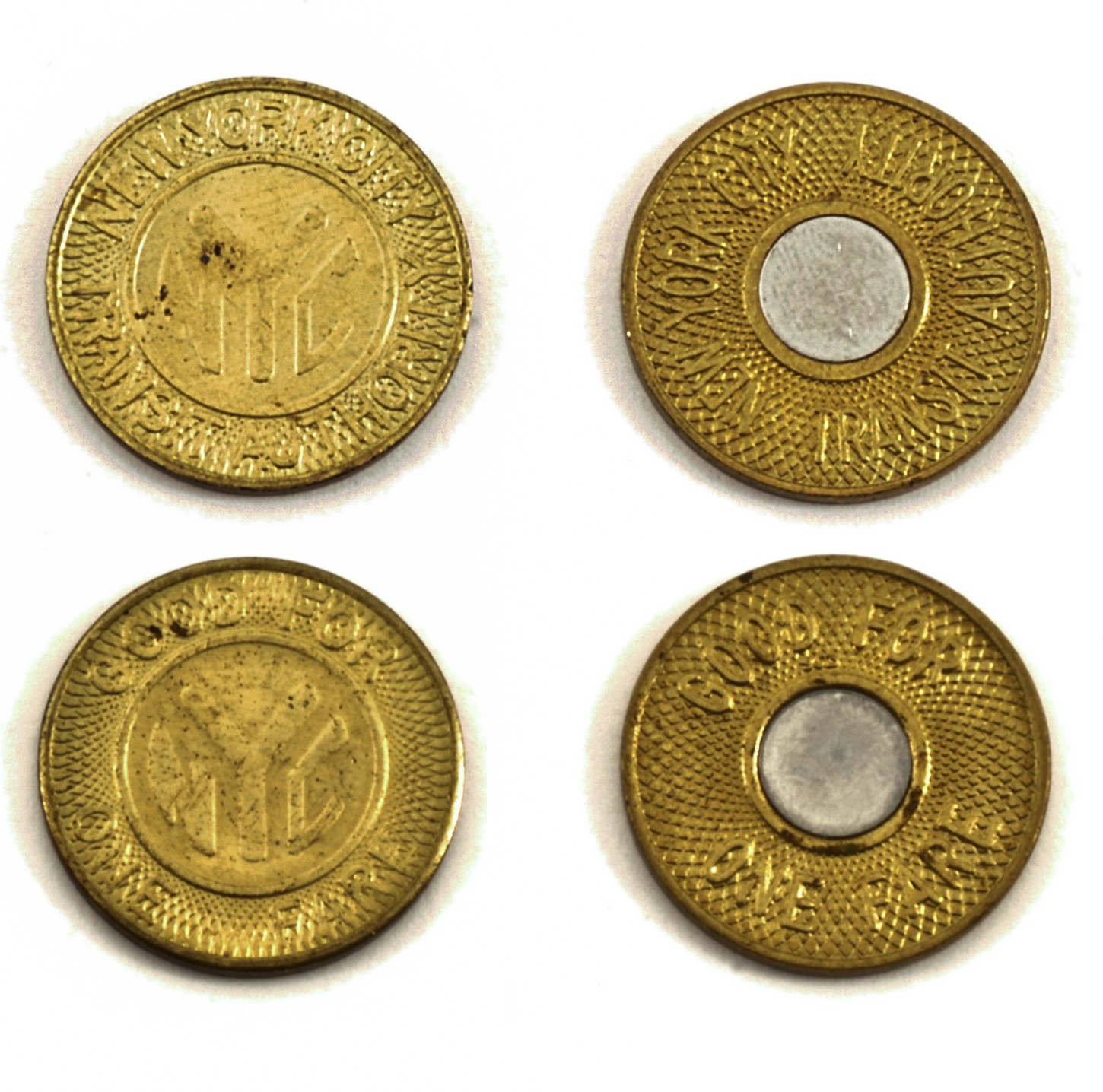
By 1985, the Transit Authority was finding about 250,000 slugs, or fake tokens, a month in its turnstiles. To make the token harder to fake, it introduced a new token in 1986: a brass disc with a stainless-steel dot in the center.
Counterfeiters needed about two years to copy the new token. The Transit Authority began finding copies in its turnstiles in 1988. A man with a metal shop pressed steel centers into brass discs and sold the copies to a gang called The Ministry, which sold them on to street sellers. Police arrested eight of the gang’s members in June 1991, after months of undercover work in which a detective bought slugs from the gang.
From January 1994, riders could also pay with the MetroCard, a fare card that the Transit Authority sold and riders swiped at the turnstile.
The records
“Dime Stores Eliminate Toy Coins as a ‘Token’ to Tokens”
Brooklyn Eagle, July 28, 1953
Citation
- Record
- Brooklyn Eagle, page 9, “Dime Stores Eliminate Toy Coins as a ‘Token’ to Tokens”
- Credit
- Brooklyn Eagle
- Date
- July 28, 1953
- Found at
- Brooklyn Public Library, Brooklyn Newsstand
- Rights
- Copyrighted. Only the headline and a few quoted words appear on this site.
- Full citation
- Brooklyn Eagle, July 28, 1953, page 9, "Dime Stores Eliminate Toy Coins as a 'Token' to Tokens." Brooklyn Public Library, Brooklyn Newsstand.
- Online
- The page at the Brooklyn Public Library
“foreign coins, metal washers, pieces of tin, counterfeit tokens”
FBI Law Enforcement Bulletin, April 1959
Citation
- Record
- FBI Law Enforcement Bulletin, pages 5 and 6, “Organization and Role of a Transit Police Department”
- Credit
- U.S. Department of Justice
- Date
- April 1959
- Found at
- FBI Law Enforcement Bulletin archive
- Rights
- Public domain
- Full citation
- Thomas J. O'Rourke, Chief, New York City Transit Police Department, "Organization and Role of a Transit Police Department," FBI Law Enforcement Bulletin, April 1959, pages 5 and 6. U.S. Department of Justice. Public domain.
- Online
- The April 1959 issue
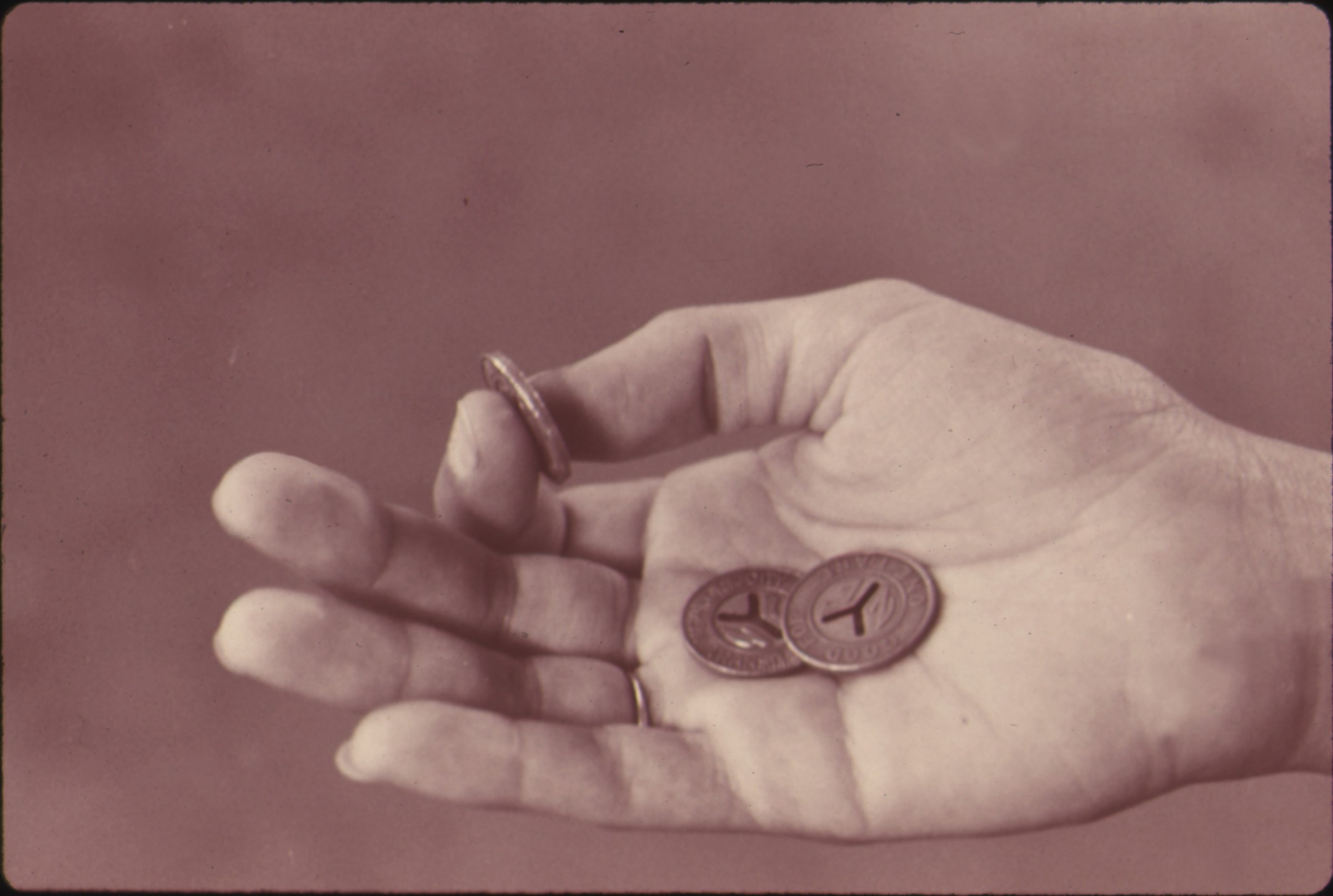
Three 35-cent subway tokens in an open hand
Three 35-cent subway tokens, July 1974
Citation
- Record
- Three 35-cent subway tokens, a photograph
- Credit
- Photograph by Jim Pickerell
- Date
- July 1974
- Found at
- U.S. National Archives, via Wikimedia Commons
- Rights
- Public domain
- Full citation
- Photograph by Jim Pickerell, July 1974. U.S. National Archives, via Wikimedia Commons. Public domain.
- Online
- The photograph at Wikimedia Commons
“Rob Bus Driver, Get $6 Exact”
Daily News, September 1, 1969
Citation
- Record
- Daily News, page 3, “Rob Bus Driver, Get $6 Exact”
- Credit
- Daily News, New York
- Date
- September 1, 1969
- Found at
- newspapers.com
- Rights
- Copyrighted. Only the headline and a few quoted words appear on this site.
- Full citation
- Daily News (New York), September 1, 1969, page 3, "Rob Bus Driver, Get $6 Exact."
- Online
- The page at newspapers.com
“the turnstiles here don’t appear to notice the difference”
Daily News, November 18, 1982
Citation
- Record
- Daily News, page 4, “Fighting Fare With Fare”
- Credit
- Mark Liff, Daily News, New York
- Date
- November 18, 1982
- Found at
- newspapers.com
- Rights
- Copyrighted. The short article and its two pictures of tokens appear on this site.
- Full citation
- Mark Liff, "Fighting Fare With Fare," Daily News (New York), November 18, 1982, page 4.
- Online
- The page at newspapers.com
“The thief waits for the rider to try another turnstile or complain to the clerk, then sucks the coin out of the slot.”
Staten Island Advance, August 8, 1989
Citation
- Record
- Staten Island Advance, page 12, “T.A. testing device in continuing fight against token suckers”
- Credit
- Associated Press, in the Staten Island Advance
- Date
- August 8, 1989
- Found at
- newspapers.com
- Rights
- Copyrighted. Only the headline, the opening of the story and a few quoted words appear on this site.
- Full citation
- Associated Press, "T.A. testing device in continuing fight against token suckers," Staten Island Advance, August 8, 1989, page 12.
- Online
- The page at newspapers.com
The 1980 token and the 1986 bull's-eye token
The 1980 subway token and the 1986 bull's-eye token, front and back. Photograph by Ɱ, CC BY-SA 3.0, cropped
Citation
- Record
- New York City subway tokens, a photograph
- Credit
- Photograph by the Wikimedia Commons user Ɱ
- Date
- 2014
- Found at
- Wikimedia Commons
- Rights
- CC BY-SA 3.0. The cropped picture on this site is under the same licence.
- Full citation
- Ɱ, "NYSubwayTokens.tif," photograph, Wikimedia Commons, CC BY-SA 3.0.
- Online
- The photograph at Wikimedia Commons
“sell at sixteen for 10 cents at toy counters”
The New York Times, page 35, “Turnstiles Reset to Bar Play Coins,” July 27, 1953.
Citation
- Record
- The New York Times, page 35, “Turnstiles Reset to Bar Play Coins”
- Credit
- Leonard Ingalls, The New York Times
- Date
- July 27, 1953
- Found at
- The New York Times archive
- Rights
- Copyrighted. Only a few words are quoted on this site.
- Full citation
- Leonard Ingalls, "Turnstiles Reset to Bar Play Coins; Authority Finds Solution to Big Token Worry," The New York Times, July 27, 1953, page 35.
- Online
- The story at the Times
“18 play tokens”
Daily News, pages 3 and 15, “Riders Bright, Unconfused in 1st 15c Rush,” July 28, 1953.
Citation
- Record
- Daily News, pages 3 and 15, “Riders Bright, Unconfused in 1st 15c Rush”
- Credit
- Edwin Ross and Henry Lee, Daily News, New York
- Date
- July 28, 1953
- Found at
- newspapers.com
- Rights
- Copyrighted. Only a few words are quoted on this site.
- Full citation
- Edwin Ross and Henry Lee, "Riders Bright, Unconfused in 1st 15c Rush," Daily News (New York), July 28, 1953, pages 3 and 15.
- Online
- The page at newspapers.com
“the authority’s official brass tokens”
The New York Times, page 1, “City Adjusts to Token Fares; Play Coins Worry Authority,” July 26, 1953.
Citation
- Record
- The New York Times, page 1, “City Adjusts to Token Fares; Play Coins Worry Authority”
- Credit
- Leonard Ingalls, The New York Times
- Date
- July 26, 1953
- Found at
- The New York Times archive
- Rights
- Copyrighted. Only a few words are quoted on this site.
- Full citation
- Leonard Ingalls, "City Adjusts to Token Fares; Play Coins Worry Authority," The New York Times, July 26, 1953, page 1.
- Online
- The story at the Times
“Today, they stole only the bus driver’s personal $6.”
The New York Times, page 1, “Exact Bus Fares Begin Smoothly,” September 1, 1969.
Citation
- Record
- The New York Times, page 1, “Exact Bus Fares Begin Smoothly”
- Credit
- Sylvan Fox, The New York Times
- Date
- September 1, 1969
- Found at
- The New York Times archive
- Rights
- Copyrighted. Only a few words are quoted on this site.
- Full citation
- Sylvan Fox, "Exact Bus Fares Begin Smoothly; $6 Robbery of Driver Mars First Day of New System," The New York Times, September 1, 1969, page 1.
- Online
- The story at the Times
“to end the danger of holdups of bus drivers”
The New York Times, page 23, “Exact-Change Rule Starts on Buses Here At Midnight Tonight,” August 30, 1969.
Citation
- Record
- The New York Times, page 23, “Exact-Change Rule Starts on Buses Here At Midnight Tonight”
- Credit
- The New York Times
- Date
- August 30, 1969
- Found at
- The New York Times archive
- Rights
- Copyrighted. Only a few words are quoted on this site.
- Full citation
- "Exact-Change Rule Starts on Buses Here At Midnight Tonight," The New York Times, August 30, 1969, page 23.
- Online
- The story at the Times
“But we also were hedging our bets”
The New York Times, page 1, “Token Unchanged,” January 5, 1972.
Citation
- Record
- The New York Times, page 1, “Token Unchanged”
- Credit
- Frank J. Prial, The New York Times
- Date
- January 5, 1972
- Found at
- The New York Times archive
- Rights
- Copyrighted. Only a few words are quoted on this site.
- Full citation
- Frank J. Prial, "Token Unchanged; M.T.A. Also Votes Rise in Tolls for Bridges and Tunnels," The New York Times, January 5, 1972, page 1.
- Online
- The story at the Times
“Six people were nabbed yesterday at the Wall St. and Bowling Green stations”
Daily News, page 3, “He Raises a Stotinki,” November 25, 1982.
Citation
- Record
- Daily News, page 3, “He Raises a Stotinki”
- Credit
- Mark Liff and Larry Sutton, Daily News, New York
- Date
- November 25, 1982
- Found at
- newspapers.com
- Rights
- Copyrighted. Only a few words are quoted on this site.
- Full citation
- Mark Liff and Larry Sutton, "He Raises a Stotinki," Daily News (New York), November 25, 1982, page 3.
- Online
- The page at newspapers.com
“started dropping them into the slots shortly after they went on sale Oct. 18”
Newsday, page 3, “Conn. Tokens Used in Subway,” November 18, 1982.
Citation
- Record
- Newsday, page 3, “Conn. Tokens Used in Subway”
- Credit
- T. J. Collins, Newsday
- Date
- November 18, 1982
- Found at
- newspapers.com
- Rights
- Copyrighted. Only a few words are quoted on this site.
- Full citation
- T. J. Collins, "Conn. Tokens Used in Subway," Newsday (New York), November 18, 1982, page 3.
- Online
- The page at newspapers.com
“The kids came back with buckets of water”
The New York Times, section B, page 1, “Youths Stealing Subway Tokens by Sucking on Turnstile Slots,” February 7, 1983.
Citation
- Record
- The New York Times, section B, page 1, “Youths Stealing Subway Tokens by Sucking on Turnstile Slots”
- Credit
- Ari L. Goldman, The New York Times
- Date
- February 7, 1983
- Found at
- The New York Times archive
- Rights
- Copyrighted. Only a few words are quoted on this site.
- Full citation
- Ari L. Goldman, "Youths Stealing Subway Tokens by Sucking on Turnstile Slots," The New York Times, February 7, 1983, section B, page 1.
- Online
- The story at the Times
“when the last New York City subway token slides through the slot of the last booth to sell them”
The New York Times, section D, page 3, “The Kiss of Desperation: A Disgusting Practice Vanishes With the Token,” April 8, 2003.
Citation
- Record
- The New York Times, section D, page 3, “The Kiss of Desperation: A Disgusting Practice Vanishes With the Token”
- Credit
- Randy Kennedy, The New York Times
- Date
- April 8, 2003
- Found at
- The New York Times archive
- Rights
- Copyrighted. Only a few words are quoted on this site.
- Full citation
- Randy Kennedy, "Tunnel Vision; The Kiss of Desperation: A Disgusting Practice Vanishes With the Token," The New York Times, April 8, 2003, section D, page 3.
- Online
- The story at the Times
“About 250,000 slugs are found in the turnstiles each month, and about 100,000 of them are Connecticut Turnpike tokens”
Daily News, page 5, “TA will slug it out token-to-token,” August 22, 1985.
Citation
- Record
- Daily News, page 5, “TA will slug it out token-to-token”
- Credit
- Richard Sisk, Daily News, New York
- Date
- August 22, 1985
- Found at
- newspapers.com
- Rights
- Copyrighted. Only a few words are quoted on this site.
- Full citation
- Richard Sisk, "TA will slug it out token-to-token," Daily News (New York), August 22, 1985, page 5.
- Online
- The page at newspapers.com
“TA officials balked at allowing a photo of one of the phony tokens for fear of encouraging a copycat.”
Daily News, page 4, “Token play that game, says TA of counterfeits,” March 2, 1986.
Citation
- Record
- Daily News, page 4, “Token play that game, says TA of counterfeits”
- Credit
- Richard Sisk, Daily News, New York
- Date
- March 2, 1986
- Found at
- newspapers.com
- Rights
- Copyrighted. Only a few words are quoted on this site.
- Full citation
- Richard Sisk, "Token play that game, says TA of counterfeits," Daily News (New York), March 2, 1986, page 4.
- Online
- The page at newspapers.com
“about 10,000 bogus transit tokens a week”
Daily News, page C10, “Fake-token ring gets slugged,” June 25, 1991.
Citation
- Record
- Daily News, page C10, “Fake-token ring gets slugged”
- Credit
- John Marzulli, Daily News, New York
- Date
- June 25, 1991
- Found at
- newspapers.com
- Rights
- Copyrighted. Only a few words are quoted on this site.
- Full citation
- John Marzulli, "Fake-token ring gets slugged," Daily News (New York), June 25, 1991, page C10.
- Online
- The page at newspapers.com
“It took about two years for counterfeiters to perfect new slugs”
Daily News, pages 5 and C11, “The Slug Sleuth,” August 11, 1991.
Citation
- Record
- Daily News, pages 5 and C11, “The Slug Sleuth”
- Credit
- Dean Chang, Daily News, New York
- Date
- August 11, 1991
- Found at
- newspapers.com
- Rights
- Copyrighted. Only a few words are quoted on this site.
- Full citation
- Dean Chang, "The Slug Sleuth," with the sidebar "Tokens & Slugs Keeping Pace," Daily News (New York), August 11, 1991, pages 5 and C11.
- Online
- The page at newspapers.com

Chapter 5, 1994 to 2018
Riders and sellers cheated with the MetroCard
August 1994
Hackers On Planet Earth
“We expect to have representatives of the Metropolitan Transportation Authority on hand to answer questions and keep a nervous eye on us.”
1994
Hackers set out to copy the MetroCard
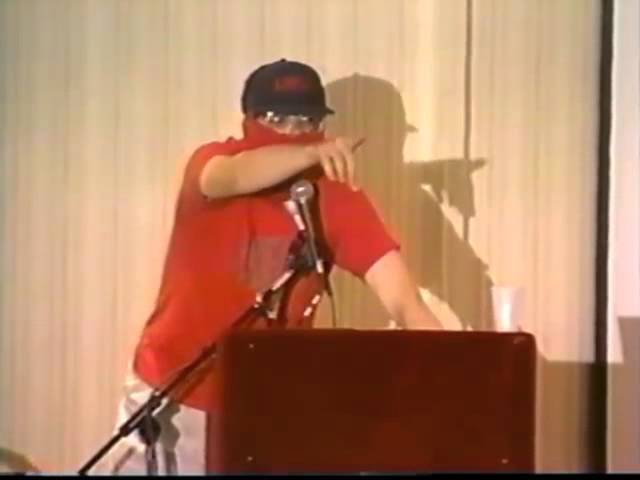
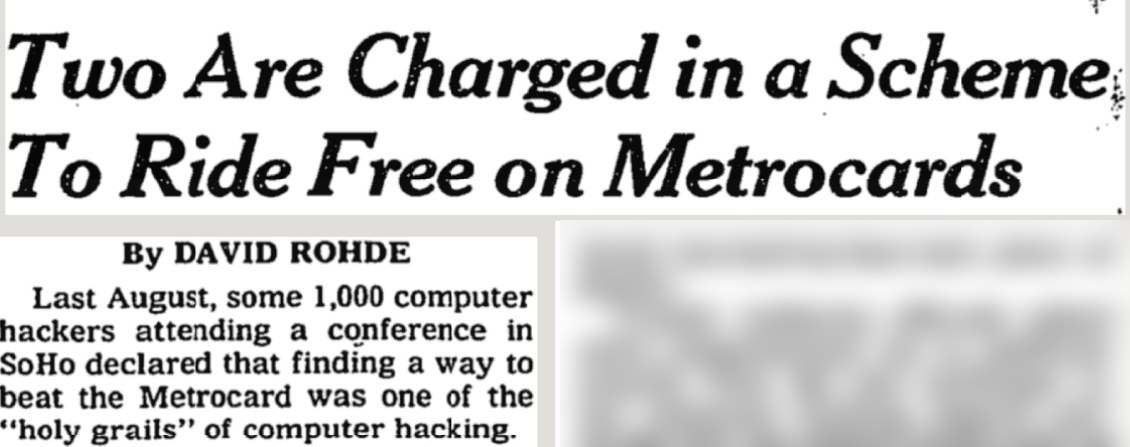
In August 1994, hackers met in Manhattan for a conference called Hackers On Planet Earth (HOPE). Its organizers announced that they would try to copy MetroCards and defeat the MetroCard system. “By the end of HOPE,” they wrote, “we will have either cracked it or deemed it secure.” On HOPE’s second day, a transit employee there told the New York Times that he thought the hackers weren’t close to cracking it.
The Transit Authority expected that someone might copy a MetroCard’s magnetic strip onto a second card and ride on the copy without paying. Each card had a serial number, transit officials told the Times in February 1994, so their computer system could flag a card whose number was used at two far-apart stations within a short time.
At HOPE’s session on the MetroCard, a guest speaker told the audience that one man had already gotten through a turnstile with a copied card. The man had recorded the contents of a MetroCard’s strip onto audio tape and glued the tape to a card. He was arrested, according to the speaker, after a police officer saw him take out a card that didn’t look like a MetroCard.
1997 to 1998
People bent MetroCards and sold free rides
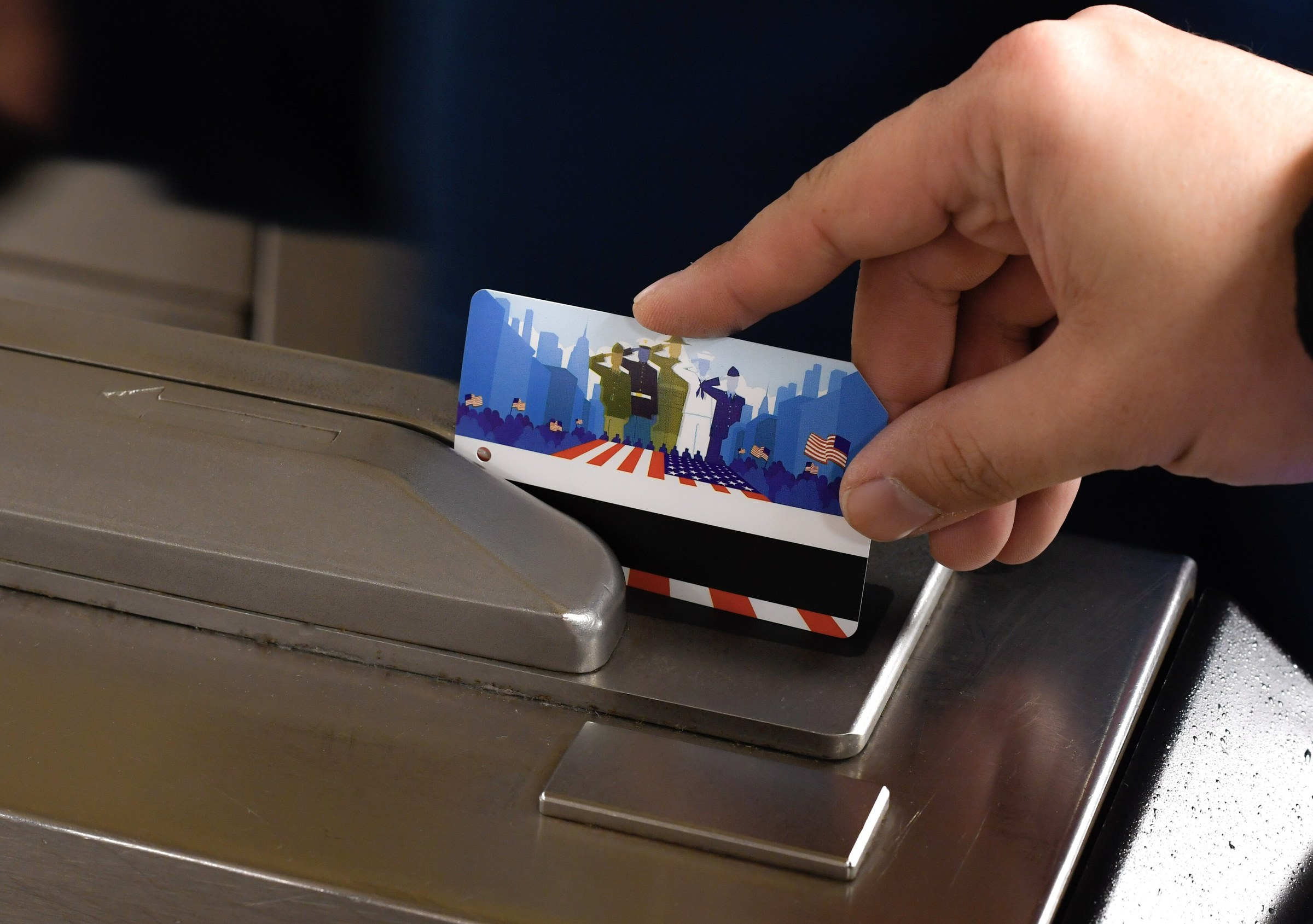
By 1997, people had found that when a MetroCard was bent in a certain place, a turnstile let a rider through without deducting the fare from the card. Transit officials knew about the trick but didn’t act against it for at least a year, because so few people used it.
On a bent card, part of the information recorded on the strip could no longer be read. When a turnstile couldn’t read a strip, it asked the rider to swipe again. According to the company that made the turnstiles, the turnstile tried to repair the damaged data when the rider swiped again, and then opened.
In January 1998, the Transit Authority’s president said that six bent cards had been used about 50 times each in one day at two stations. The police, who had seen people swipe other riders through and collect money, arrested two of them.
When the arrests were reported, the editor of 2600, a magazine for hackers, called the trick “ridiculously simple” and told the Times, “I couldn’t believe it took us this long to figure it out.”
The Transit Authority then reprogrammed its more than 3,000 turnstiles to declare a card invalid after two swipes if they couldn’t read it, so riders could no longer ride free on a bent card.
2003 to 2009
People bent empty MetroCards and sold the extra ride
After 1998, people found a way to get one more ride out of a MetroCard whose balance had run out. It turned out that the balance was recorded in two places on the card’s magnetic strip, as a backup in case one was damaged. A turnstile changed only one of the two at each ride, so a card that had just run out showed zero in one place and its earlier balance in the other. A small bend in the strip made the place that showed zero unreadable, so the turnstile read only the earlier balance and let the rider through.
Some people collected discarded cards, bent them, and swiped riders through for less than the fare, a trade known as selling swipes. In 2003, the Transit Authority said that card benders stole an average of 500 rides each weekday.
New York State made selling swipes a misdemeanor in 2005. In 2009, the state’s highest court ruled that a card bent this way was a forgery, and upheld one seller’s felony conviction, for which he had been sentenced to two to four years in prison.
2011 to 2018
Swipe sellers disabled the MetroCard machines
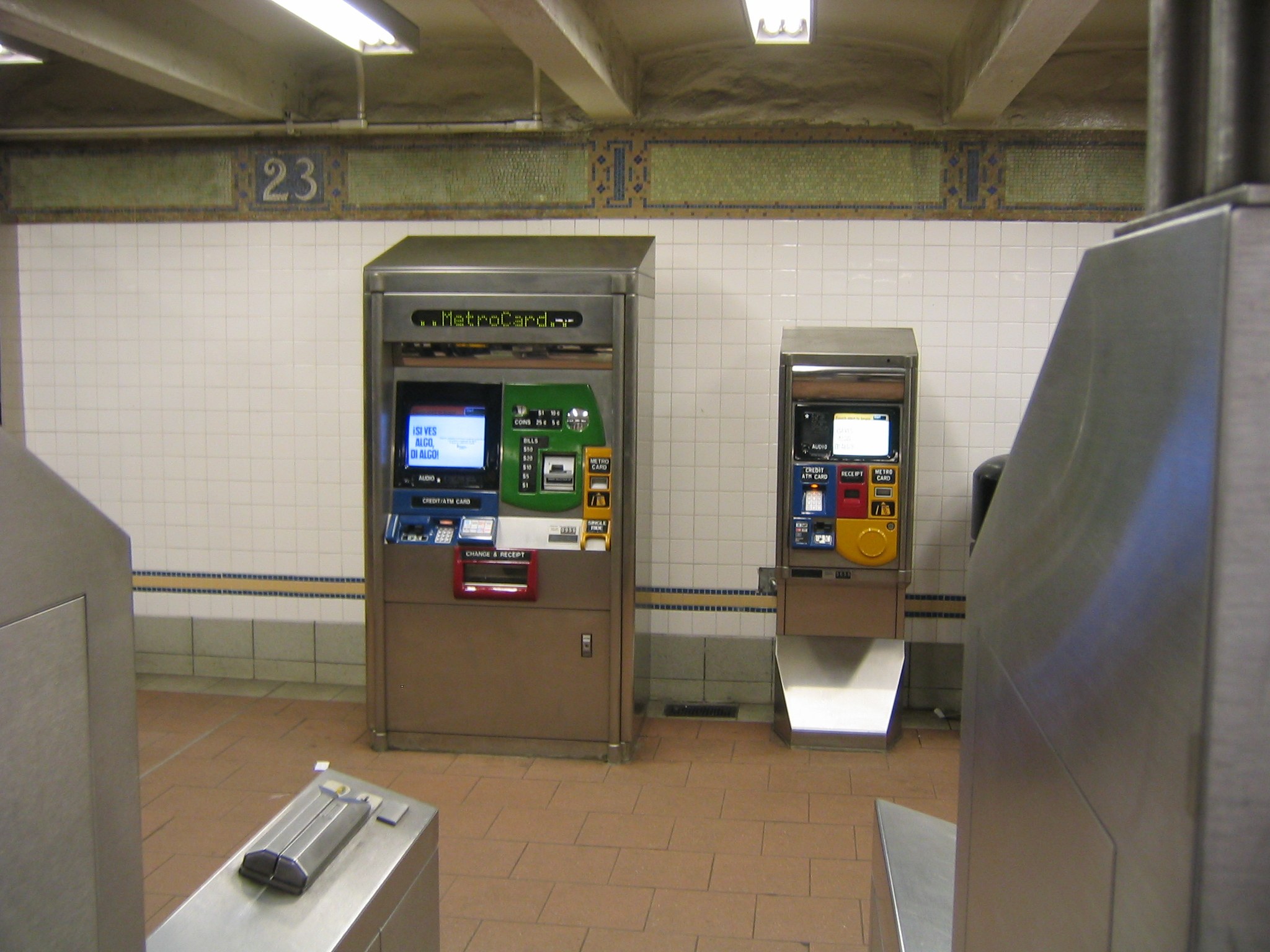
Swipe sellers stuffed paper, cardboard, or used MetroCards into the slots of the stations’ MetroCard vending machines so that riders couldn’t buy cards from them. Some riders then paid a seller to swipe them through the turnstile instead of waiting in line at the station’s booth. A police captain said in 2011 that the sellers typically paid for a few unlimited-ride MetroCards and earned that money back by the end of a day.
In October 2011, the police said a man had stuffed cardboard into the machine at a Manhattan station and then offered to swipe riders through for $2. The fare was $2.25 (about $3.20 in today’s dollars). He pleaded guilty and was sentenced to 60 days in jail.
In 2018, the police reported 12 arrests of swipe sellers at one Queens station where sellers kept disabling the machines.
From 2019, riders could pay with a tap of a bank card, a phone, or a watch. MetroCard sales ended at the end of 2025.
The records
A MetroCard swiped at a turnstile
A MetroCard swiped at a turnstile, 2020. Photograph by the Metropolitan Transportation Authority, CC BY 2.0
Citation
- Record
- “Swiping a MetroCard,” a photograph
- Credit
- Photograph by the Metropolitan Transportation Authority
- Date
- November 2020
- Found at
- Wikimedia Commons
- Rights
- CC BY 2.0
- Full citation
- "Swiping a MetroCard." Photograph by the Metropolitan Transportation Authority, November 2020, Wikimedia Commons, CC BY 2.0.
- Online
- The photograph at Wikimedia Commons
The CC BY 2.0 licence
MetroCard vending machines in a subway station
MetroCard vending machines in a subway station, 2004. Photograph by Alistair McMillan, CC BY-SA 2.0
Citation
- Record
- “NYCS MetroCard Vending Machine,” a photograph
- Credit
- Photograph by Alistair McMillan
- Date
- April 23, 2004
- Found at
- Wikimedia Commons
- Rights
- CC BY-SA 2.0
- Full citation
- "NYCS MetroCard Vending Machine." Photograph by Alistair McMillan, April 23, 2004, Wikimedia Commons, CC BY-SA 2.0.
- Online
- The photograph at Wikimedia Commons
The CC BY-SA 2.0 licence
“I couldn’t believe it took us this long to figure it out”
The New York Times, January 8, 1998
Citation
- Record
- The New York Times, “Two Are Charged in a Scheme To Ride Free on Metrocards”
- Credit
- David Rohde, The New York Times
- Date
- January 8, 1998
- Found at
- The New York Times
- Rights
- Copyrighted. Only the headline, the opening of the story and a few quoted words appear on this site.
- Full citation
- David Rohde, "Two Are Charged in a Scheme To Ride Free on Metrocards," New York Times, January 8, 1998.
- Online
- The article at the New York Times
“By the end of HOPE, we will have either cracked it or deemed it secure.”
A recording of “The New York City Metrocard,” a session at the Hackers On Planet Earth conference, August 13, 1994.
Citation
- Record
- A recording of “The New York City Metrocard,” a session at the Hackers On Planet Earth conference
- Credit
- 2600: The Hacker Quarterly
- Date
- August 13, 1994
- Found at
- 2600’s channel on YouTube, and the Internet Archive
- Rights
- Copyrighted. Only a few words are quoted on this site.
- Full citation
- "Hackers On Planet Earth: The New York City Metrocard," recording of a conference session, August 13, 1994. 2600: The Hacker Quarterly, on its YouTube channel and at the Internet Archive.
- Online
- The recording on 2600’s YouTube channel
The recording at the Internet Archive
A machine-made transcript at the Internet Archive
“We hold that this type of alteration can be prosecuted as a forgery.”
People v. Mattocks, an opinion of the New York Court of Appeals, April 30, 2009.
Citation
- Record
- People v. Mattocks, an opinion of the New York Court of Appeals
- Credit
- New York Court of Appeals
- Date
- April 30, 2009
- Found at
- Cornell Law School, Legal Information Institute
- Rights
- Public domain
- Full citation
- People v. Mattocks, New York Court of Appeals, April 30, 2009. Copy at the Legal Information Institute, Cornell Law School. Public domain.
- Online
- The opinion at Cornell
“a 25-cent discount on the usual $2.25 fare”
DNAinfo New York, “Police Arrest Man Running Downtown MetroCard Scam,” October 31, 2011.
Citation
- Record
- DNAinfo New York, “Police Arrest Man Running Downtown MetroCard Scam”
- Credit
- Julie Shapiro, DNAinfo New York
- Date
- October 31, 2011
- Found at
- The DNAinfo archive
- Rights
- Copyrighted. Only a few words are quoted on this site.
- Full citation
- Julie Shapiro, "Police Arrest Man Running Downtown MetroCard Scam," DNAinfo New York, October 31, 2011.
- Online
- The story at DNAinfo
“men who jam the MetroCard vending machine cash feeder”
DNAinfo New York, “Bronx Vandals Break Machines to Sell Illegal MetroCard Swipes, MTA Says,” October 29, 2013.
Citation
- Record
- DNAinfo New York, “Bronx Vandals Break Machines to Sell Illegal MetroCard Swipes, MTA Says”
- Credit
- Alice Speri, DNAinfo New York
- Date
- October 29, 2013
- Found at
- The DNAinfo archive
- Rights
- Copyrighted. Only a few words are quoted on this site.
- Full citation
- Alice Speri, "Bronx Vandals Break Machines to Sell Illegal MetroCard Swipes, MTA Says," DNAinfo New York, October 29, 2013.
- Online
- The story at DNAinfo
“paper and left-over MetroCards are jammed into the machine’s slot, causing it to break down”
PIX11, “MetroCard hustlers suspected of jamming machines to scam tourists,” November 14, 2018.
Citation
- Record
- PIX11, “MetroCard hustlers suspected of jamming machines to scam tourists”
- Credit
- Mary Murphy, PIX11
- Date
- November 14, 2018
- Found at
- PIX11
- Rights
- Copyrighted. Only a few words are quoted on this site.
- Full citation
- Mary Murphy, "MetroCard hustlers suspected of jamming machines to scam tourists," PIX11, November 14, 2018.
- Online
- The story at PIX11
“The MTA ended sales of the MetroCard”
amNewYork, “The MTA still accepts MetroCards in the OMNY era,” July 17, 2026.
Citation
- Record
- amNewYork, “The MTA still accepts MetroCards in the OMNY era”
- Credit
- Ethan Stark-Miller, amNewYork
- Date
- July 17, 2026
- Found at
- amNewYork
- Rights
- Copyrighted. Only a few words are quoted on this site.
- Full citation
- Ethan Stark-Miller, "The MTA still accepts MetroCards in the OMNY era," amNewYork, July 17, 2026.
- Online
- The story at amNewYork
“the computer system would tip them off if the same number were used to enter the system twice in a short period from widely separated points”
The New York Times, “Fare Card Plan In the Subways Exceeds Goals,” February 20, 1994.
Citation
- Record
- The New York Times, “Fare Card Plan In the Subways Exceeds Goals”
- Credit
- Matthew L. Wald, The New York Times
- Date
- February 20, 1994
- Found at
- The New York Times
- Rights
- Copyrighted. Only a few words are quoted on this site.
- Full citation
- Matthew L. Wald, "Fare Card Plan In the Subways Exceeds Goals," New York Times, February 20, 1994.
- Online
- The article at the New York Times
“no one was yet close to cracking the magnetic code”
The New York Times, “‘Phreakers’ Take a Swipe At Turnstiles and Nynex,” August 15, 1994.
Citation
- Record
- The New York Times, “‘Phreakers’ Take a Swipe At Turnstiles and Nynex”
- Credit
- Jennifer Steinhauer, The New York Times
- Date
- August 15, 1994
- Found at
- The New York Times
- Rights
- Copyrighted. Only a few words are quoted on this site.
- Full citation
- Jennifer Steinhauer, "‘Phreakers’ Take a Swipe At Turnstiles and Nynex," New York Times, August 15, 1994.
- Online
- The article at the New York Times
“six of the modified cards were used on Monday an average of 50 times each”
The New York Times, “Transit Agency Planning To Reprogram Turnstiles,” January 9, 1998.
Citation
- Record
- The New York Times, “Transit Agency Planning To Reprogram Turnstiles”
- Credit
- Andy Newman, The New York Times
- Date
- January 9, 1998
- Found at
- The New York Times
- Rights
- Copyrighted. Only a few words are quoted on this site.
- Full citation
- Andy Newman, "Transit Agency Planning To Reprogram Turnstiles," New York Times, January 9, 1998.
- Online
- The article at the New York Times
“another bending ploy permitted one illicit extra ride on a discarded card”
The New York Times, “Bending the MetroCard, Breaking the Law,” in the column Following Up, August 24, 2003.
Citation
- Record
- The New York Times, “Bending the MetroCard, Breaking the Law,” in the column Following Up
- Credit
- Joseph P. Fried, The New York Times
- Date
- August 24, 2003
- Found at
- The New York Times
- Rights
- Copyrighted. Only a few words are quoted on this site.
- Full citation
- Joseph P. Fried, "Following Up: Bending the MetroCard, Breaking the Law," New York Times, August 24, 2003.
- Online
- The column at the New York Times
“Bending a crease into the magnetic strip of a pay-per-ride MetroCard tricked the turnstile reader into giving a free onetime ride.”
The New York Times, “Appeal Fails in Forgery of MetroCard,” May 1, 2009.
Citation
- Record
- The New York Times, “Appeal Fails in Forgery of MetroCard”
- Credit
- Sewell Chan, The New York Times
- Date
- May 1, 2009
- Found at
- The New York Times
- Rights
- Copyrighted. Only a few words are quoted on this site.
- Full citation
- Sewell Chan, "Appeal Fails in Forgery of MetroCard," New York Times, May 1, 2009.
- Online
- The article at the New York Times
“he or she, in exchange for value, sells access to such transportation services to such person, without authorization, through the use of an unlimited farecard or doctored farecard”
New York criminal jury instruction, Penal Law 165.16, “Unauthorized Sale of Certain Transportation Services,” for acts on or after July 11, 2005.
Citation
- Record
- New York criminal jury instruction, Penal Law 165.16, “Unauthorized Sale of Certain Transportation Services”
- Credit
- New York State Unified Court System
- Date
- For acts on or after July 11, 2005
- Found at
- New York State Unified Court System
- Rights
- Public document of the New York courts
- Full citation
- Criminal Jury Instructions, Penal Law 165.16(1), "Unauthorized Sale of Certain Transportation Services (Committed on or after July 11, 2005)." New York State Unified Court System.
- Online
- The instruction at the New York courts
“Tap and go with the digital wallet on your mobile phone, smart watch, and other wearable devices.”
OMNY.info, the MTA’s page for its tap-and-go fare system, as it stood three days after the system opened, June 3, 2019.
Citation
- Record
- OMNY.info, the MTA’s page for its tap-and-go fare system, as it stood three days after the system opened
- Credit
- Metropolitan Transportation Authority
- Date
- June 3, 2019
- Found at
- The Internet Archive’s Wayback Machine
- Rights
- Copyrighted. Only a few words are quoted on this site.
- Full citation
- Metropolitan Transportation Authority, OMNY.info home page, as captured by the Internet Archive's Wayback Machine on June 3, 2019.
- Online
- The page as the Wayback Machine saved it


Chapter 6, 2019 to 2026
Riders and workers cheated at gates and fareboxes
2019 to 2025
Impostors and station workers took cash to let riders in
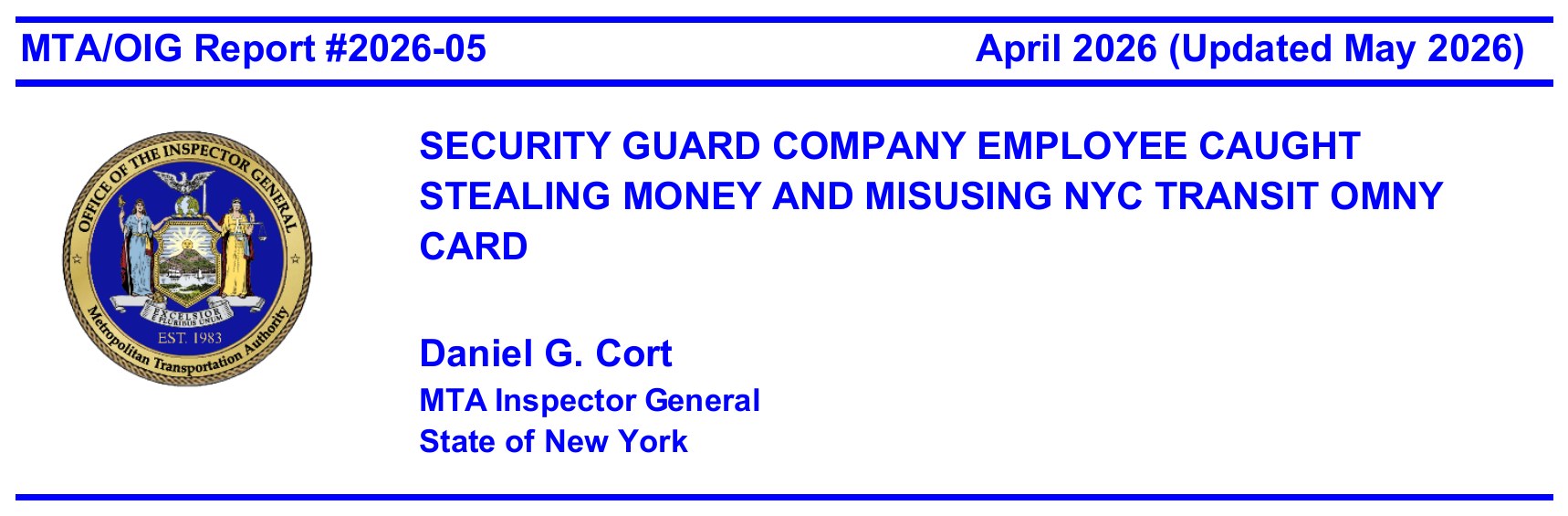
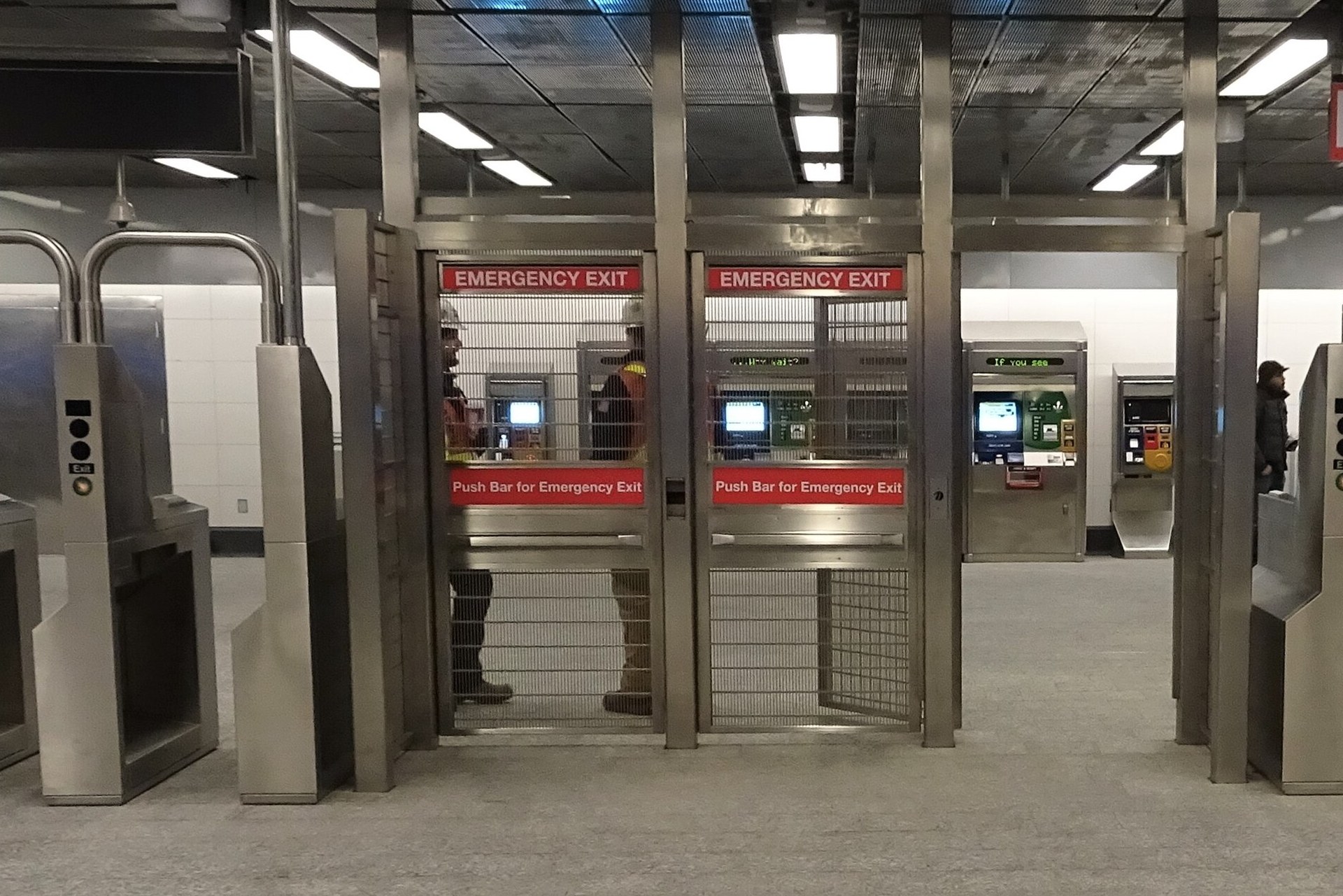
In 2019, the chief safety officer of the Metropolitan Transportation Authority (MTA) said that people were posing as MTA workers to take riders’ money. They wore safety vests, told riders the turnstile was broken, opened an emergency exit gate beside the turnstiles, and took money from each rider who walked through.
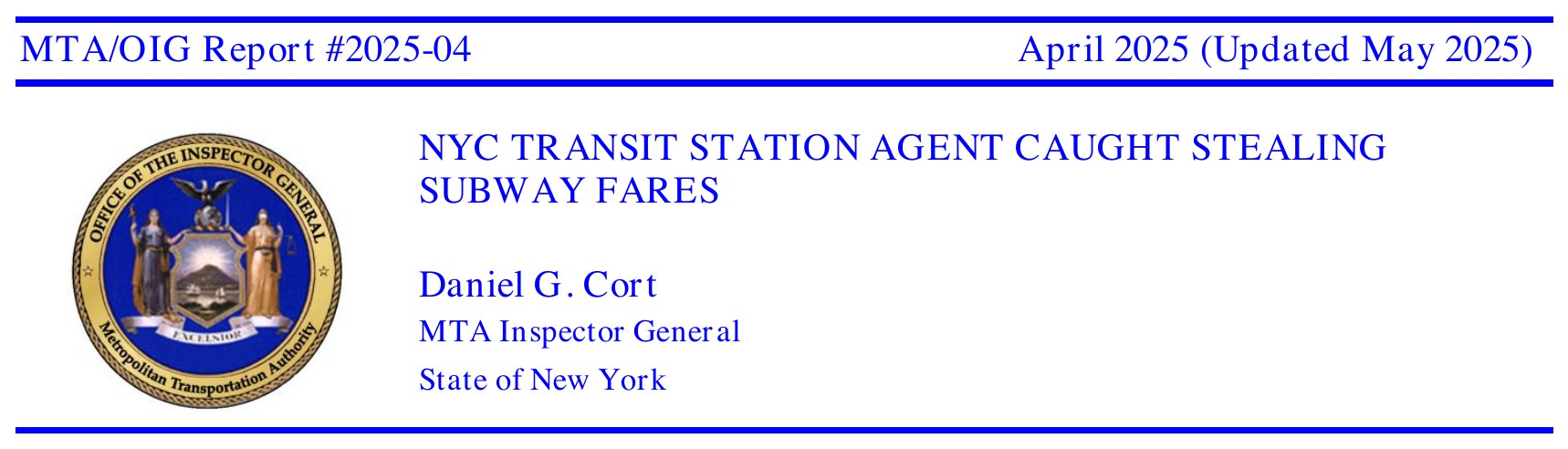
A station agent in 2024 and a station guard in 2025 each pocketed riders’ cash and let the riders in. After complaints, investigators for the MTA’s inspector general confirmed both cases on station video. The agent retired before the investigation ended. The Transit Authority barred the guard from working on MTA property.
2020 to 2026
Bus riders walked past the farebox without paying
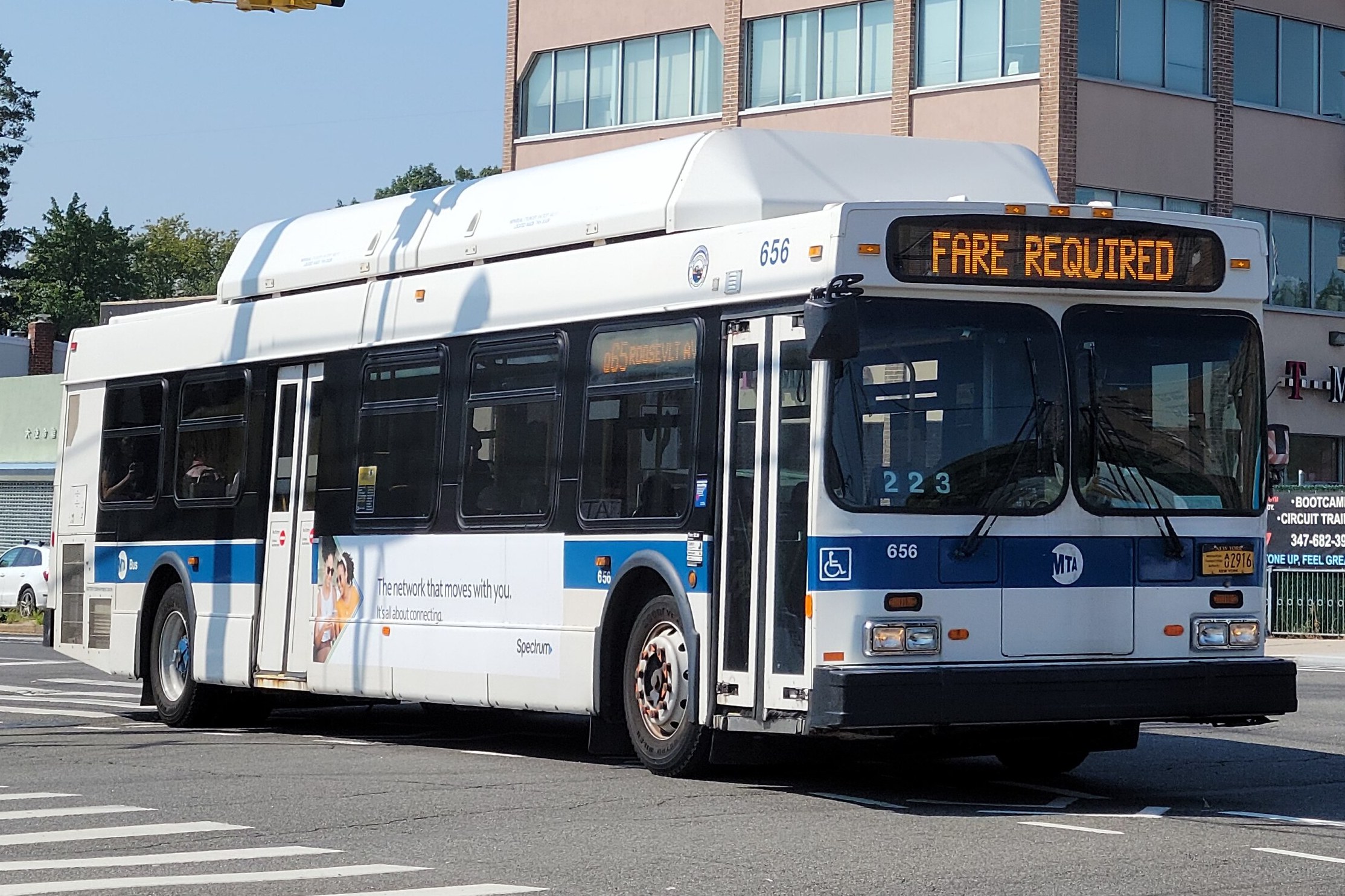
In March 2020, the MTA stopped collecting fares on many of its buses as one measure to keep riders at a distance from drivers during the COVID-19 pandemic. When it began collecting fares again that August, many passengers rode for free. They walked past the farebox or boarded through the back door. In spring 2024, the MTA estimated that half of its bus riders didn’t pay.
The MTA instructed its drivers not to intervene, because confronting a fare evader could put a driver in danger. For example, one rider who was asked to pay pointed a gun at the driver and threatened the driver’s life.
In late 2024, the MTA sought consultants to study why riders skipped the fare and to design campaigns to change their minds. As an example of a campaign that changed behavior, the MTA pointed to Colombia, where “mimes stationed at traffic intersections to reprimand errant drivers and pedestrians halved the number of traffic fatalities.” The MTA had dropped the search without hiring anyone by February 2025.
In the summer of 2026, the MTA estimated that 47 percent of bus riders still didn’t pay.
2023 to 2026
Most fare evaders walked in through the emergency gates
In 2023, according to the MTA’s panel on fare evasion, more than half of the people who entered the subway without paying walked in through an emergency gate.
Riders often exited the subway system through the emergency gates. People who didn’t want to pay waited for an exiting rider to open a gate, then walked in. To get riders to use the turnstiles instead, the MTA experimented with adding a 15-second delay before the gates would open. The MTA reported that 38 percent fewer people entered without paying through the gates in its experiment.
Some people found a way to unlock the emergency gates from the outside. Every gate opened with the same key, issued by the fire department. Over the years, according to the MTA’s panel on fare evasion, keys had been handed to emergency crews and contractors. Copies of those keys ended up in the hands of people who weren’t supposed to have them. To stop them, the MTA replaced the gate locks.
In March 2026, emergency gates were still the most common way for people who didn’t pay to get into the subway. An MTA official said that riders who walked through them without paying made up 52 percent of all fare evasion.
2024
Students put their free fare cards up for sale
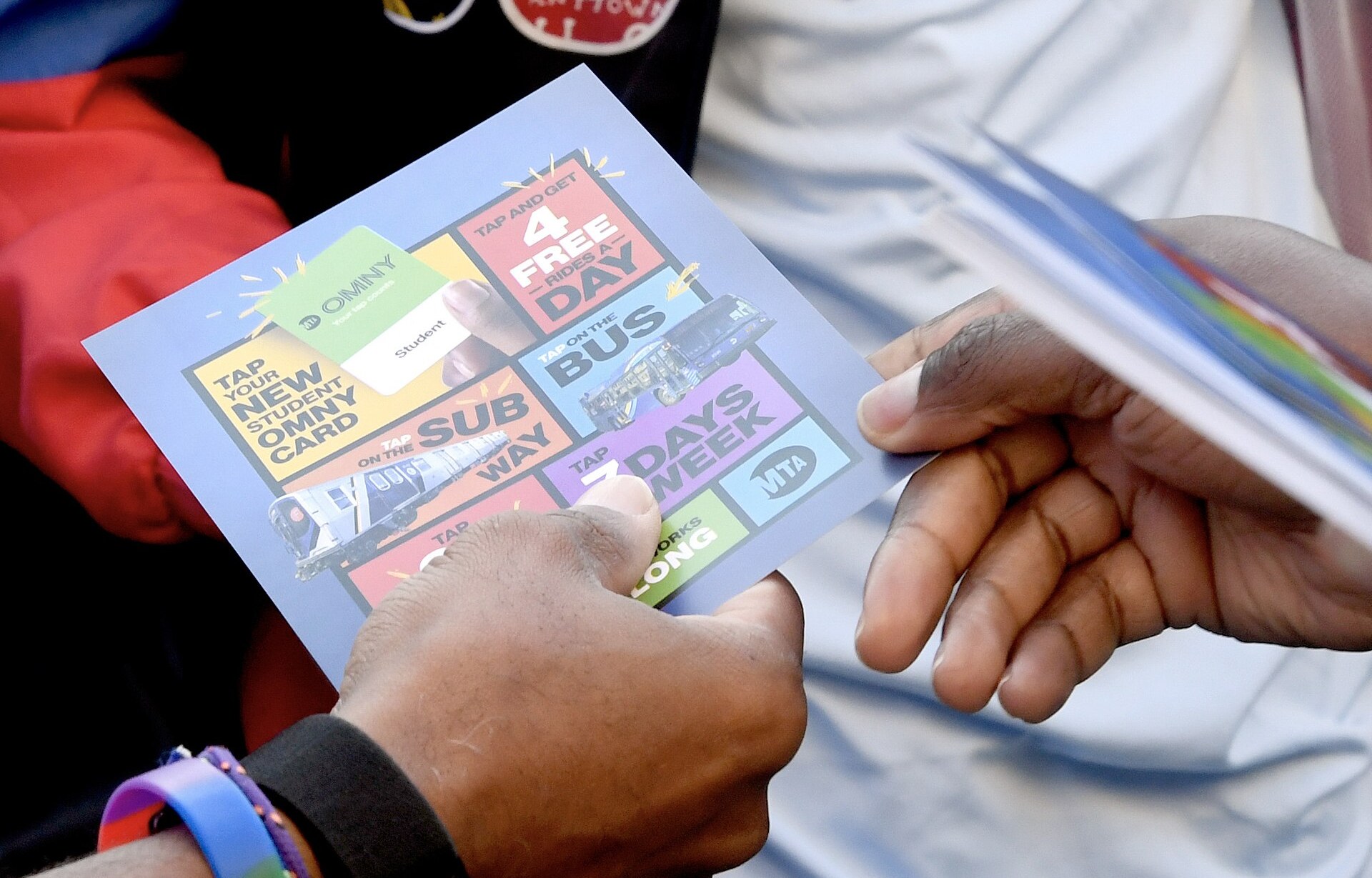
By 2024, riders could pay at the turnstile by tapping a bank card, phone, or watch through the MTA’s tap-to-pay system, OMNY. That September, New York City’s schools gave students OMNY cards, each meant for one student and good for up to four free rides a day. Within days, students were offering their cards for sale on Facebook Marketplace.
One student agreed to sell his card to a reporter for the New York Post, who posed as a buyer, for $75. According to the Post, he assured the reporter that “once a card was activated, it couldn’t be deactivated.” To show that his card worked, he tapped it at a turnstile. “Card not accepted,” the screen flashed in red. Afterward, the MTA told the Post that it was deactivating the cards that appeared for sale.
January 2026
FOX 5 New York
“a Brooklyn content creator’s viral videos are drawing attention to how some riders are still getting through without paying.”
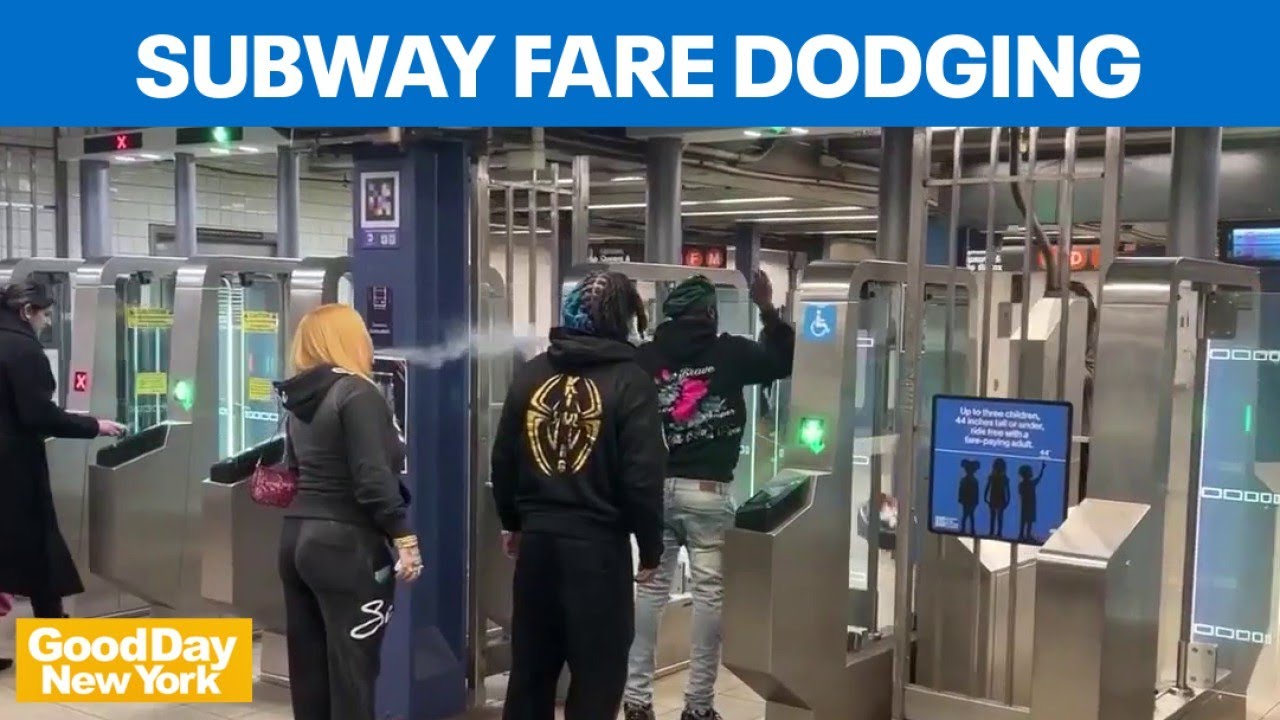
2025 to 2026
Riders got through the MTA’s new fare gates without paying
In December 2025, the MTA began testing new fare gates at the Broadway-Lafayette Street station. The gates had tall glass doors in place of a turnstile’s arm. The MTA intended them to replace both turnstiles and emergency gates. MTA officials said that the Broadway-Lafayette gates would sense a rider who hadn’t paid, slam shut, and sound a horn.
Within a month, people posted videos on social media of riders throwing a jacket or scarf across a gate’s sensors to make its doors open. In one video, FOX 5 New York reported, a man tossed his bonnet over a gate, after which “the doors swing open, and four or five people walk through as an alarm begins to sound.” In March 2026, an MTA official told the agency’s board that some riders had managed to get over and under the gates.
By October 2026, the MTA had put the new gates in at 20 stations. According to the governor’s office, fare evasion at those stations had fallen by an average of 35 percent.
The records
“used an MTA-issued One Metro New York (OMNY) farecard to grant subway entry to passengers in exchange for cash”
From the Office of the MTA Inspector General, report 2026-05, April 2026
Citation
- Record
- Office of the MTA Inspector General, report 2026-05, “Security Guard Company Employee Caught Stealing Money and Misusing NYC Transit OMNY Card”
- Credit
- Office of the MTA Inspector General
- Date
- April 2026, updated May 2026
- Found at
- The inspector general’s website
- Rights
- Copyright the Office of the MTA Inspector General, which permits copying for educational purposes with this credit. The report’s title block and a few quoted words appear on this site.
- Full citation
- From the Office of the MTA Inspector General. "Security Guard Company Employee Caught Stealing Money and Misusing NYC Transit OMNY Card," report 2026-05. Internet. Available from https://mtaig.ny.gov/Reports/2026-05%20Security%20Guard%20Company%20Employee%20Caught%20Stealing%20Money%20and%20Misusing%20NYC%20Transit%20OMNY%20Card.pdf. Accessed 12 November 2026.
- Online
- The report at the inspector general’s site
“put the cash in his pocket and let the Complainant in through the turnstile”
From the Office of the MTA Inspector General, report 2025-04, April 2025
Citation
- Record
- Office of the MTA Inspector General, report 2025-04, “NYC Transit Station Agent Caught Stealing Subway Fares”
- Credit
- Office of the MTA Inspector General
- Date
- April 2025, updated May 2025
- Found at
- The inspector general’s website
- Rights
- Copyright the Office of the MTA Inspector General, which permits copying for educational purposes with this credit. The report’s title block and a few quoted words appear on this site.
- Full citation
- From the Office of the MTA Inspector General. "NYC Transit Station Agent Caught Stealing Subway Fares," report 2025-04. Internet. Available from https://mtaig.ny.gov/Reports/2025-04%20NYC%20Transit%20Station%20Agent%20Caught%20Stealing%20Subway%20Fares%20w%20Agency%20Response.pdf. Accessed 15 November 2026.
- Online
- The report at the inspector general’s site
Two emergency exit gates in a row of turnstiles
Two emergency exit gates in a row of turnstiles, December 2016. Photograph by Jim Henderson, CC BY-SA 4.0
Citation
- Record
- “South turnstiles E96 IND from north,” a photograph
- Credit
- Photograph by Jim Henderson
- Date
- December 23, 2016
- Found at
- Wikimedia Commons
- Rights
- CC BY-SA 4.0
- Full citation
- "South turnstiles E96 IND from north." Photograph by Jim Henderson, December 23, 2016, Wikimedia Commons, CC BY-SA 4.0.
- Online
- The photograph at Wikimedia Commons
The CC BY-SA 4.0 licence
A flyer about student OMNY cards on the first day of school
A flyer for the new student OMNY cards, handed out on the first day of school, September 2024. Photograph by Marc A. Hermann, Metropolitan Transportation Authority, CC BY 2.0
Citation
- Record
- “NYC Kicks Off School Year with Students OMNY Cards,” a photograph
- Credit
- Photograph by Marc A. Hermann, Metropolitan Transportation Authority
- Date
- September 5, 2024
- Found at
- Wikimedia Commons
- Rights
- CC BY 2.0
- Full citation
- "NYC Kicks Off School Year with Students OMNY Cards." Photograph by Marc A. Hermann, Metropolitan Transportation Authority, September 5, 2024, Wikimedia Commons, CC BY 2.0.
- Online
- The photograph at Wikimedia Commons
The CC BY 2.0 licence
A city bus with FARE REQUIRED on its front sign
A city bus in Queens with FARE REQUIRED on its front sign, August 2025. Photograph by Tdorante10, CC BY-SA 4.0
Citation
- Record
- “Union Tpke 164th St, Fare Required,” a photograph
- Credit
- Photograph by Tdorante10
- Date
- August 15, 2025
- Found at
- Wikimedia Commons
- Rights
- CC BY-SA 4.0
- Full citation
- "Union Tpke 164th St, Fare Required." Photograph by Tdorante10, August 15, 2025, Wikimedia Commons, CC BY-SA 4.0.
- Online
- The photograph at Wikimedia Commons
The CC BY-SA 4.0 licence
“On Friday, the MTA rolled out the OMNY tap-and-go payment system in certain areas.”
NBC New York, “NYC is One Step Closer to Saying Goodbye to MetroCards as MTA Starts Rolling Out OMNY,” May 31, 2019.
Citation
- Record
- NBC New York, “NYC is One Step Closer to Saying Goodbye to MetroCards as MTA Starts Rolling Out OMNY”
- Credit
- Tracie Strahan, NBC New York
- Date
- May 31, 2019
- Found at
- NBC New York
- Rights
- Copyrighted. Only a few words are quoted on this site.
- Full citation
- Tracie Strahan, "NYC is One Step Closer to Saying Goodbye to MetroCards as MTA Starts Rolling Out OMNY," NBC New York, May 31, 2019.
- Online
- The story at NBC New York
“Over time, the keys have been widely duplicated and have fallen into unauthorized hands.”
Report of the Blue-Ribbon Panel on MTA Fare and Toll Evasion, May 2023.
Citation
- Record
- Report of the Blue-Ribbon Panel on MTA Fare and Toll Evasion
- Credit
- Metropolitan Transportation Authority
- Date
- May 2023
- Found at
- MTA.info
- Rights
- Copyrighted. Only a few words are quoted on this site.
- Full citation
- Metropolitan Transportation Authority, Report of the Blue-Ribbon Panel on MTA Fare and Toll Evasion, May 2023, pages 45 and 47.
- Online
- The report at MTA.info
“The Fire Department is now using keys that can’t be duplicated, officials said.”
Gothamist, “MTA to re-tool subway turnstiles to stop fare evasion through back-cocking,” July 17, 2023.
Citation
- Record
- Gothamist, “MTA to re-tool subway turnstiles to stop fare evasion through back-cocking”
- Credit
- Giulia Heyward, Gothamist
- Date
- July 17, 2023
- Found at
- Gothamist
- Rights
- Copyrighted. Only a few words are quoted on this site.
- Full citation
- Giulia Heyward, "MTA to re-tool subway turnstiles to stop fare evasion through back-cocking," Gothamist, July 17, 2023.
- Online
- The story at Gothamist
“The first of the new designs landed at the Broadway-Lafayette station on Friday”
Gothamist, “Like parkour: New Yorkers mull new ways to fare beat at redesigned subway gates,” December 22, 2025.
Citation
- Record
- Gothamist, “Like parkour: New Yorkers mull new ways to fare beat at redesigned subway gates”
- Credit
- Ramsey Khalifeh, Gothamist
- Date
- December 22, 2025
- Found at
- Gothamist
- Rights
- Copyrighted. Only a few words are quoted on this site.
- Full citation
- Ramsey Khalifeh, "Like parkour: New Yorkers mull new ways to fare beat at redesigned subway gates," Gothamist, December 22, 2025.
- Online
- The story at Gothamist
“Videos circulating on social media show commuters slipping past the MTA’s newest fare gates”
FOX 5 New York, “Riders find loopholes in MTA’s new fare gates,” January 14, 2026.
Citation
- Record
- FOX 5 New York, “Riders find loopholes in MTA’s new fare gates”
- Credit
- Adeja Shivonne, FOX 5 New York
- Date
- January 14, 2026
- Found at
- FOX 5 New York
- Rights
- Copyrighted. Only a few words are quoted on this site.
- Full citation
- Adeja Shivonne, "Riders find loopholes in MTA's new fare gates," FOX 5 New York, January 14, 2026.
- Online
- The story at FOX 5
The video on FOX 5’s TikTok
“a Brooklyn content creator’s viral videos are drawing attention to how some riders are still getting through without paying.”
FOX 5 New York, “NYC’s spider-man exposes gaps in MTA’s new fare gate system,” January 15, 2026.
Citation
- Record
- FOX 5 New York, “NYC’s spider-man exposes gaps in MTA’s new fare gate system”
- Credit
- FOX 5 New York
- Date
- January 15, 2026
- Found at
- FOX 5 New York
- Rights
- Copyrighted. Only a few words are quoted on this site.
- Full citation
- "NYC's spider-man exposes gaps in MTA's new fare gate system," FOX 5 New York, January 15, 2026.
- Online
- The story at FOX 5
The report on FOX 5’s YouTube channel
“MTA’s Subways team has replaced all 1,620 access key locks on the gates with new highly secure locks”
MTA press release, “MTA Moves to Implement Blue-Ribbon Panel’s Recommendations on Fare and Toll Evasion,” July 19, 2023.
Citation
- Record
- MTA press release, “MTA Moves to Implement Blue-Ribbon Panel’s Recommendations on Fare and Toll Evasion”
- Credit
- Metropolitan Transportation Authority
- Date
- July 19, 2023
- Found at
- MTA.info
- Rights
- Copyrighted. Only a few words are quoted on this site.
- Full citation
- Metropolitan Transportation Authority, "MTA Moves to Implement Blue-Ribbon Panel's Recommendations on Fare and Toll Evasion," press release, July 19, 2023.
- Online
- The release at MTA.info
“Sometimes tricksters will don a safety vest; open an emergency gate and charge riders a dollar or two to walk through”
QNS, “MetroCard scammers cost MTA roughly $40 million a year: officials,” December 17, 2019.
Citation
- Record
- QNS, “MetroCard scammers cost MTA roughly $40 million a year: officials”
- Credit
- Vincent Barone, amNewYork, as carried by QNS
- Date
- December 17, 2019
- Found at
- QNS
- Rights
- Copyrighted. Only a few words are quoted on this site.
- Full citation
- Vincent Barone, "MetroCard scammers cost MTA roughly $40 million a year: officials," QNS, December 17, 2019. First published by amNewYork.
- Online
- The story at QNS
“observed a 38% decrease in evasion through the gate”
MTA press release, “MTA Announces Progress on Reducing Subway Fare Evasion,” May 22, 2024.
Citation
- Record
- MTA press release, “MTA Announces Progress on Reducing Subway Fare Evasion”
- Credit
- Metropolitan Transportation Authority
- Date
- May 22, 2024
- Found at
- MTA.info
- Rights
- Copyrighted. Only a few words are quoted on this site.
- Full citation
- Metropolitan Transportation Authority, "MTA Announces Progress on Reducing Subway Fare Evasion," press release, May 22, 2024.
- Online
- The release at MTA.info
“Implemented delayed egress at over 70 stations”
MTA, “Progress Report on Fare and Toll Collection: Update to the MTA Operating Committees,” April 28, 2025.
Citation
- Record
- MTA, “Progress Report on Fare and Toll Collection: Update to the MTA Operating Committees”
- Credit
- Metropolitan Transportation Authority
- Date
- April 28, 2025
- Found at
- MTA.info
- Rights
- Copyrighted. Only a few words are quoted on this site.
- Full citation
- Metropolitan Transportation Authority, "Progress Report on Fare and Toll Collection: Update to the MTA Operating Committees," April 28, 2025.
- Online
- The report at MTA.info
“We have many creative New Yorkers who have been able to get over and under, and they love sharing that with us on social media”
amNewYork, “Fare evasion: MTA officials say modern fare gates being piloted are dramatically stopping turnstile cheats,” March 25, 2026.
Citation
- Record
- amNewYork, “Fare evasion: MTA officials say modern fare gates being piloted are dramatically stopping turnstile cheats”
- Credit
- Ethan Stark-Miller, amNewYork
- Date
- March 25, 2026
- Found at
- amNewYork
- Rights
- Copyrighted. Only a few words are quoted on this site.
- Full citation
- Ethan Stark-Miller, "Fare evasion: MTA officials say modern fare gates being piloted are dramatically stopping turnstile cheats," amNewYork, March 25, 2026.
- Online
- The story at amNewYork
“saw fare evasion decline by an average of 35 percent at the 20 stations where new, modern gates have been installed”
Office of the Governor of New York, “Governor Hochul Announces New Subway Gate Pilot Reduced Fare Evasion by 35%, Unveils Next 20 Stations to Receive Modern Fare Gates,” October 7, 2026.
Citation
- Record
- Office of the Governor of New York, “Governor Hochul Announces New Subway Gate Pilot Reduced Fare Evasion by 35%, Unveils Next 20 Stations to Receive Modern Fare Gates”
- Credit
- Office of the Governor of New York
- Date
- October 7, 2026
- Found at
- The governor’s website
- Rights
- Copyrighted. Only a few words are quoted on this site.
- Full citation
- Office of the Governor of New York, "Governor Hochul Announces New Subway Gate Pilot Reduced Fare Evasion by 35%, Unveils Next 20 Stations to Receive Modern Fare Gates," press release, October 7, 2026.
- Online
- The release at the governor’s site
“The bus fare evasion (BFE) rate is the estimated percentage of riders who illegally board buses.”
MTA open data, “MTA Bus Fare Evasion: Beginning 2019,” updated October 23, 2026.
Citation
- Record
- MTA open data, “MTA Bus Fare Evasion: Beginning 2019”
- Credit
- Metropolitan Transportation Authority
- Date
- Updated October 23, 2026
- Found at
- New York State’s open data site
- Rights
- Copyrighted. Only a few words are quoted on this site.
- Full citation
- Metropolitan Transportation Authority, "MTA Bus Fare Evasion: Beginning 2019," open data, data.ny.gov, updated October 23, 2026.
- Online
- The data at data.ny.gov
“implementing rear-door boarding measures on March 23 to protect frontline employees from the spread of COVID-19”
MTA press release, “MTA Announces Front-Door Boarding and Fare Collection to Resume on All Local and SBS Buses Beginning Monday, August 31,” August 18, 2020.
Citation
- Record
- MTA press release, “MTA Announces Front-Door Boarding and Fare Collection to Resume on All Local and SBS Buses Beginning Monday, August 31”
- Credit
- Metropolitan Transportation Authority
- Date
- August 18, 2020
- Found at
- MTA.info
- Rights
- Copyrighted. Only a few words are quoted on this site.
- Full citation
- Metropolitan Transportation Authority, "MTA Announces Front-Door Boarding and Fare Collection to Resume on All Local and SBS Buses Beginning Monday, August 31," press release, August 18, 2020.
- Online
- The release at MTA.info
“Those guards will be directed to look out for riders who skip the fare and escort them off the bus”
Gothamist, “MTA, NYPD launch enforcement blitz on bus routes with egregious fare evasion,” August 27, 2024.
Citation
- Record
- Gothamist, “MTA, NYPD launch enforcement blitz on bus routes with egregious fare evasion”
- Credit
- Bahar Ostadan and Ramsey Khalifeh, Gothamist
- Date
- August 27, 2024
- Found at
- Gothamist
- Rights
- Copyrighted. Only a few words are quoted on this site.
- Full citation
- Bahar Ostadan and Ramsey Khalifeh, "MTA, NYPD launch enforcement blitz on bus routes with egregious fare evasion," Gothamist, August 27, 2024.
- Online
- The story at Gothamist
“In Colombia, mimes stationed at traffic intersections to reprimand errant drivers and pedestrians halved the number of traffic fatalities.”
MTA New York City Transit, “Catalyzing Behavioral Change to Address Fare Evasion,” a request for proposals, December 6, 2024.
Citation
- Record
- MTA New York City Transit, “Catalyzing Behavioral Change to Address Fare Evasion,” a request for proposals
- Credit
- Metropolitan Transportation Authority
- Date
- December 6, 2024
- Found at
- MTA.info
- Rights
- Copyrighted. Only a few words are quoted on this site.
- Full citation
- MTA New York City Transit, "Catalyzing Behavioral Change to Address Fare Evasion," request for proposals, December 6, 2024.
- Online
- The document at MTA.info
“NYC Transit reviewed proposals submitted for this RFP and the decision was made not to move forward”
amNewYork, “MTA scraps plan to conduct behavioral research on fare evasion,” February 25, 2025.
Citation
- Record
- amNewYork, “MTA scraps plan to conduct behavioral research on fare evasion”
- Credit
- Barbara Russo-Lennon, amNewYork
- Date
- February 25, 2025
- Found at
- amNewYork
- Rights
- Copyrighted. Only a few words are quoted on this site.
- Full citation
- Barbara Russo-Lennon, "MTA scraps plan to conduct behavioral research on fare evasion," amNewYork, February 25, 2025.
- Online
- The story at amNewYork
“Paid boardings increased seven percent at EAGLE intervention stops”
Office of the Governor of New York, “Governor Hochul Updates New Yorkers on MTA’s Efforts to Combat Fare Evasion,” April 28, 2025.
Citation
- Record
- Office of the Governor of New York, “Governor Hochul Updates New Yorkers on MTA’s Efforts to Combat Fare Evasion”
- Credit
- Office of the Governor of New York
- Date
- April 28, 2025
- Found at
- The governor’s website
- Rights
- Copyrighted. Only a few words are quoted on this site.
- Full citation
- Office of the Governor of New York, "Governor Hochul Updates New Yorkers on MTA's Efforts to Combat Fare Evasion," press release, April 28, 2025.
- Online
- The release at the governor’s site
“But when he demonstrated the card at the turnstile, it was denied.”
New York Post, “NYC students selling school-issued subway cards good for four free rides daily per year for up to $1,500: ‘A STEAL’,” September 14, 2024.
Citation
- Record
- New York Post, “NYC students selling school-issued subway cards good for four free rides daily per year for up to $1,500: ‘A STEAL’”
- Credit
- Deirdre Bardolf, New York Post, as carried by Yahoo News
- Date
- September 14, 2024
- Found at
- Yahoo News
- Rights
- Copyrighted. Only a few words are quoted on this site.
- Full citation
- Deirdre Bardolf, "NYC students selling school-issued subway cards good for four free rides daily per year for up to $1,500: 'A STEAL'," New York Post, September 14, 2024. Carried by Yahoo News.
- Online
- The story at Yahoo News
“valid 24 hours a day, 7 days a week, 365 days a year, with up to four free rides a day”
MTA press release, “MTA, Mayor Adams, and Chancellor Banks Announce New Student OMNY Cards to Have Expanded Benefits,” July 25, 2024.
Citation
- Record
- MTA press release, “MTA, Mayor Adams, and Chancellor Banks Announce New Student OMNY Cards to Have Expanded Benefits”
- Credit
- Metropolitan Transportation Authority
- Date
- July 25, 2024
- Found at
- MTA.info
- Rights
- Copyrighted. Only a few words are quoted on this site.
- Full citation
- Metropolitan Transportation Authority, "MTA, Mayor Adams, and Chancellor Banks Announce New Student OMNY Cards to Have Expanded Benefits," press release, July 25, 2024.
- Online
- The release at MTA.info
“Your Student OMNY Card is for you—and only you!”
New York City Public Schools, “Student OMNY Cards,” a web page as it stood in September 2024, September 14, 2024.
Citation
- Record
- New York City Public Schools, “Student OMNY Cards,” a web page as it stood in September 2024
- Credit
- New York City Public Schools
- Date
- September 14, 2024
- Found at
- The Internet Archive’s Wayback Machine
- Rights
- Copyrighted. Only a few words are quoted on this site.
- Full citation
- New York City Public Schools, "Student OMNY Cards," web page as captured by the Internet Archive's Wayback Machine on September 14, 2024.
- Online
- The page as the Wayback Machine saved it


Conclusion
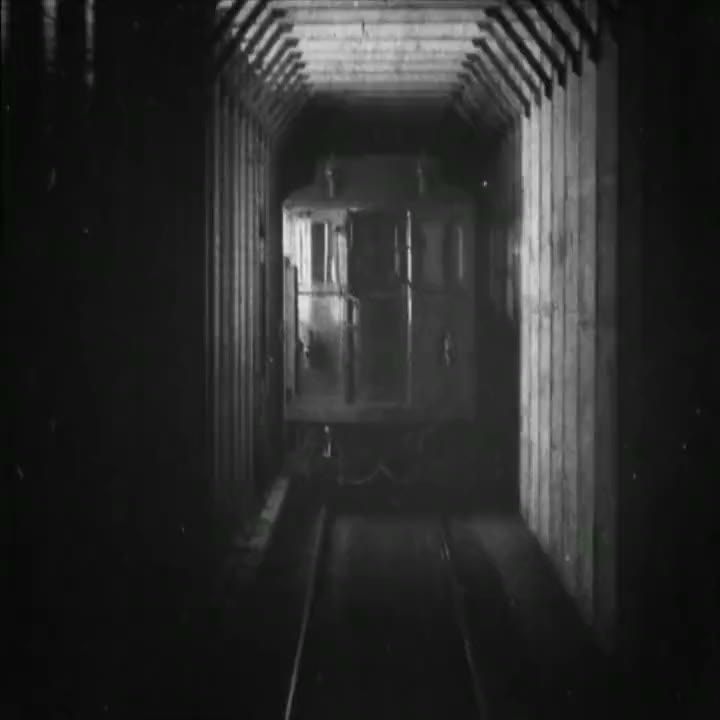
1874 to 2026
Cheaters learned to beat nearly every new way of collecting fares
From the locked fareboxes of 1874 to the glass gates of 2025, New York’s transit operators kept changing how they collected fares, often to stop cheating. Cheaters learned to beat nearly every new way of paying, with slugs, play coins, Connecticut tokens, and bent MetroCards.
The operators didn’t always try to stop the schemes, because each safeguard had a cost. In 1935, city transit officials said that stopping slugs would cost more than the fares they lost. More recently, the MTA told its bus drivers not to confront riders who didn’t pay, because a driver could get hurt. Like defenders of any system, the operators looked for ways to stop enough cheating without inconveniencing everyone else.
The records
“dishonestly holding back a portion”
New-York Tribune, May 26, 1874
Citation
- Record
- New-York Tribune, page 4, “‘Knocking Down’ Fares.”
- Credit
- New-York Tribune
- Date
- May 26, 1874
- Found at
- Library of Congress, Chronicling America
- Identifier
- sn83030214
- Rights
- Public domain
- Full citation
- New-York Tribune, May 26, 1874, page 4, "'Knocking Down' Fares." Library of Congress, Chronicling America, sn83030214. Public domain.
- Online
- The page at the Library of Congress
“Mayor LaGuardia is expected to be guest of honor and pitch out the first slug.”
Daily News, June 7, 1935
Citation
- Record
- Daily News, Brooklyn section page 25, “Fish to Get 3 Tons of Subway Phonies”
- Credit
- Daily News, New York
- Date
- June 7, 1935
- Found at
- newspapers.com
- Rights
- Copyrighted. Only the headline, the first paragraph and a few quoted words appear on this site.
- Full citation
- Daily News (New York), June 7, 1935, Brooklyn section page 25, "Fish to Get 3 Tons of Subway Phonies."
- Online
- The page at newspapers.com
“Over time, the keys have been widely duplicated and have fallen into unauthorized hands.”
Report of the Blue-Ribbon Panel on MTA Fare and Toll Evasion, May 2023.
Citation
- Record
- Report of the Blue-Ribbon Panel on MTA Fare and Toll Evasion
- Credit
- Metropolitan Transportation Authority
- Date
- May 2023
- Found at
- MTA.info
- Rights
- Copyrighted. Only a few words are quoted on this site.
- Full citation
- Metropolitan Transportation Authority, Report of the Blue-Ribbon Panel on MTA Fare and Toll Evasion, May 2023, pages 45 and 47.
- Online
- The report at MTA.info
“The first of the new designs landed at the Broadway-Lafayette station on Friday”
Gothamist, “Like parkour: New Yorkers mull new ways to fare beat at redesigned subway gates,” December 22, 2025.
Citation
- Record
- Gothamist, “Like parkour: New Yorkers mull new ways to fare beat at redesigned subway gates”
- Credit
- Ramsey Khalifeh, Gothamist
- Date
- December 22, 2025
- Found at
- Gothamist
- Rights
- Copyrighted. Only a few words are quoted on this site.
- Full citation
- Ramsey Khalifeh, "Like parkour: New Yorkers mull new ways to fare beat at redesigned subway gates," Gothamist, December 22, 2025.
- Online
- The story at Gothamist
A ride from 14th Street to 42nd Street, filmed from the front of a subway train
Part of a 1905 ride through the subway from 14th Street to 42nd Street. Library of Congress
Citation
- Record
- “Interior N.Y. subway, 14th St. to 42nd St.,” a film
- Credit
- Filmed by Billy Bitzer
- Date
- 1905
- Found at
- Library of Congress, The Life of a City: Early Films of New York
- Identifier
- Library of Congress 00694394
- Rights
- Public domain
- Full citation
- "Interior N.Y. subway, 14th St. to 42nd St.," filmed by Billy Bitzer, 1905. Library of Congress, The Life of a City: Early Films of New York, item 00694394. Public domain.
- Online
- The film at the Library of Congress
The Library's file at the Internet Archive